Backed-Out Fasteners in Long Runs
- You See
- Drips lined up along one purlin inside a storage building.
- What It Means
- Expansion pushes screws out and cracks washers. Oversized fasteners with new washers reseal the run.
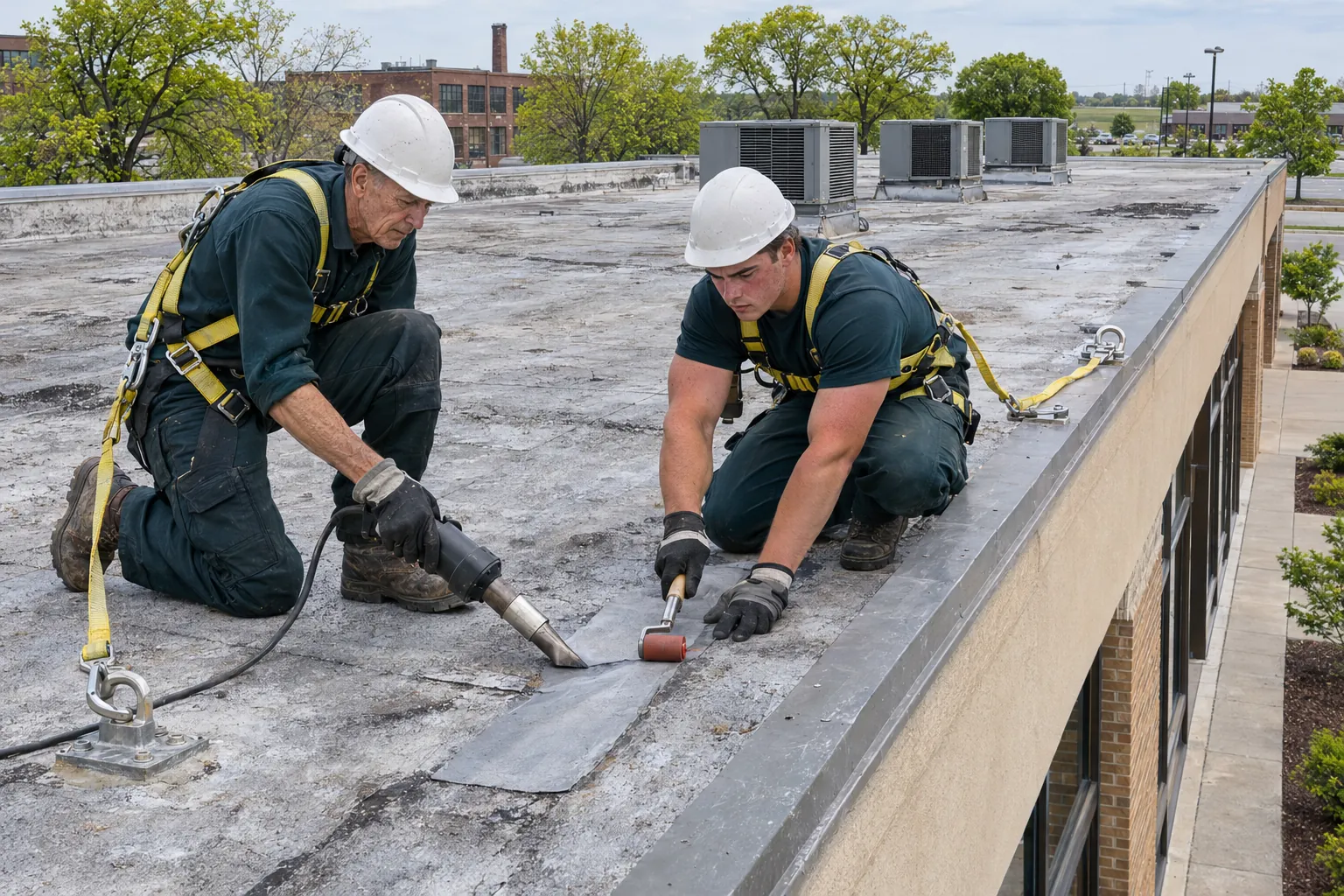
As a Plymouth commercial roof repair contractor, we fix fasteners, end laps, trim, and skylight panels on metal-roofed shops, storage buildings, and farm buildings.
Plymouth commercial roof repair is mostly metal work: industrial, storage, and agricultural buildings with ribbed panel roofs.
On exposed-fastener roofs, the panels outlast the screws, washers, and sealant that hold them down. Leaks show up as drips in a line, at end laps, or along the ridge.
Repairs keep the rib profile and gauge already on the building, so a swapped panel or new trim matches the roof around it.
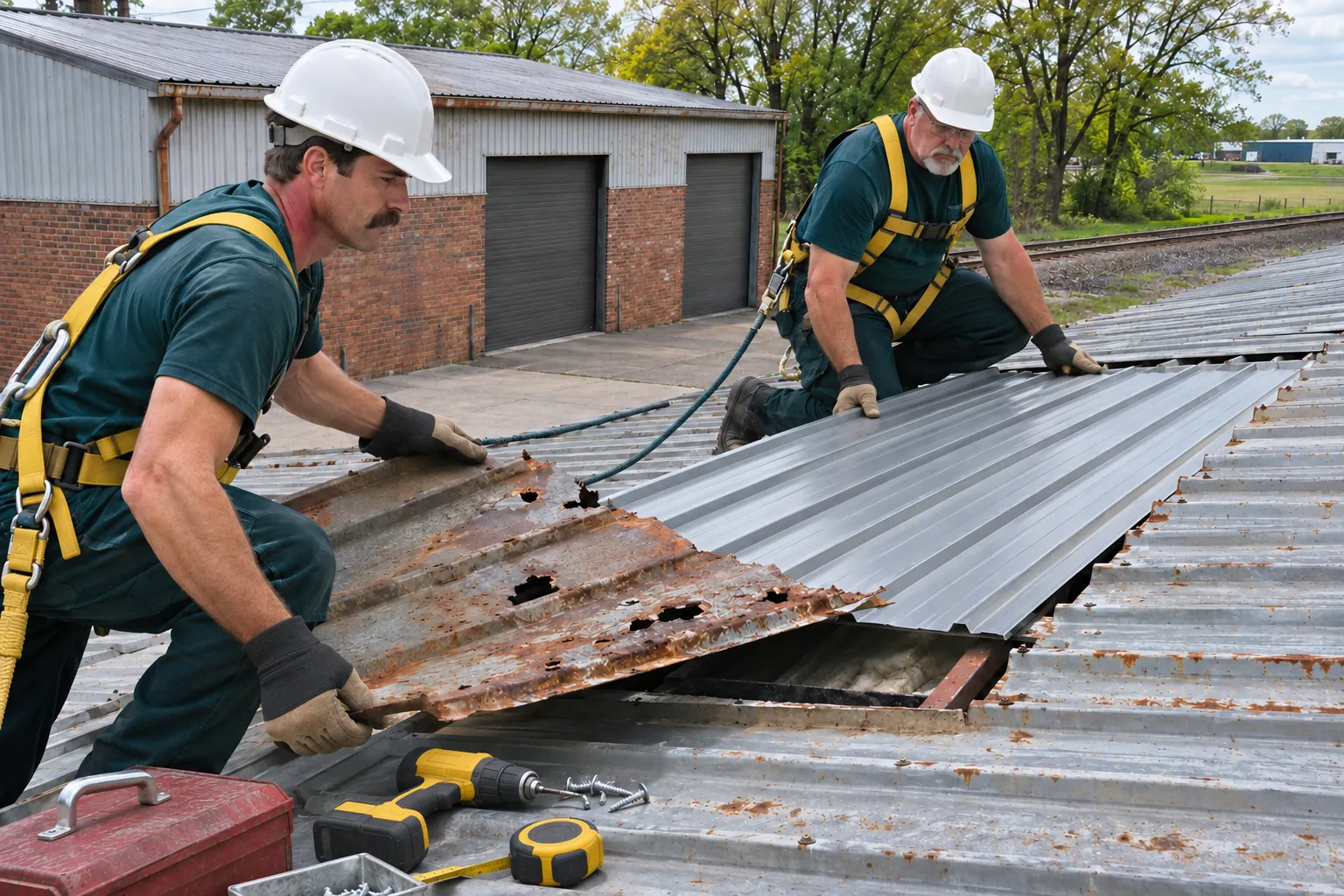
Metal buildings leak at their joints and fasteners. Each card names the cause and the fix.
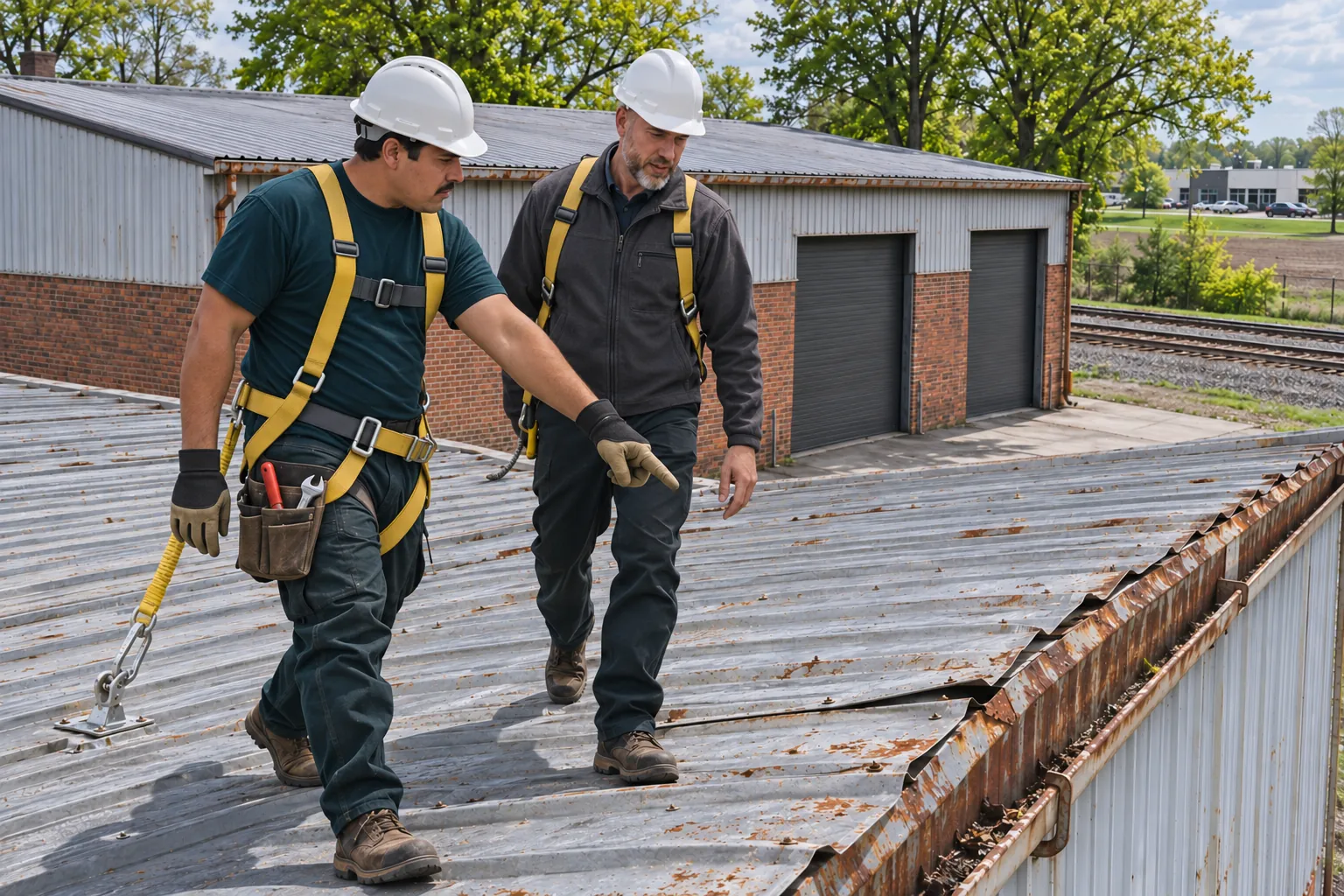
Repairing the joints keeps the steel panels in service and the contents dry.
Metal roofs here usually need detail work. Start with the card that matches what you see.
Fasteners along one purlin have backed out or lost their washers.
End laps have dried sealant and need fresh butyl tape.
Translucent panels have aged or taken hail and now leak.
Corrosion has spread across panels and purlins alike.
Tell us the building size and where the drips line up. We will bring matching fasteners and sealant to the roof walk.
Get A Free EstimateMetal building repairs follow these steps from the drip line to the last fastener.
Inside, each drip point is lined up with the purlin above it, pointing straight to the run of fasteners to check.
Rib spacing, gauge, and color are measured so any replacement panel, trim, or fastener matches the roof.
Failed screws come out and oversized ones go in, and each leaking end lap gets cleaned and resealed with butyl tape.
Rusted-through or punctured panels and cracked light panels are lifted out and replaced in the same profile.
Before leaving, every repaired run is walked to confirm the fasteners are seated, and photos are taken.
Plymouth is one of five towns we cover alongside South Bend. Building elsewhere? call us or send us a message.
Our home base for flat, metal, and plant roof repairs.
Retail and office roofs repaired around open stores and tenants.
Plant roofs where lake-effect meltwater finds curbs and drains.
TPO, EPDM, and built-up patches matched to the membrane.
Storm checks, temporary patches, and documented roof damage.
Answers for owners of metal shops, storage buildings, and farm buildings in Plymouth.
Yes. Plymouth has a lot of metal-roofed industrial, storage, and agricultural buildings, and they make up much of our work there.
Typical repairs cover backed-out fasteners, leaking end laps, worn ridge caps, rusted trim, and broken skylight panels, each resealed or replaced.
The number of fasteners and laps to redo, how many panels need swapping, roof pitch, and building height set most of the price.
A run of fasteners costs less than a panel swap. The written estimate lists each item so you can choose what to do first.
Call with the building address. Plymouth is in our regular service area, and roof walks there are scheduled like any other.
Mention the panel profile and color if you know them, so matching material can come on the first trip.
Every fastener in the leaking run, every end lap nearby, the ridge closures, and the trim. Skylight panels and penetrations need a look too.
A contractor who only seals the screw right above the drip will be back for the next one in the same run.
Condensation shows up on cold mornings without rain and drips across a wide area. A leak follows rain or melt and shows in the same spot each time.
A roof walk checks the fasteners and laps above the wet area. If they are sound, the insulation facing under the panels is the next place to look.
Usually, yes. When rust has opened only a few panels and the purlins are firm, those panels come out and new ones in the same profile go in.
Fasteners and laps around the swapped panels get redone at the same time, so the new steel ties into a sealed roof.
Send the address, the building size, and where the drips line up. We will walk the roof and price the fasteners, laps, or panels.