If Your Roof
Drips in Lines Under a Panel Run
Screws along that run have backed out or their washers have cracked.
Start WithA fastener replacement
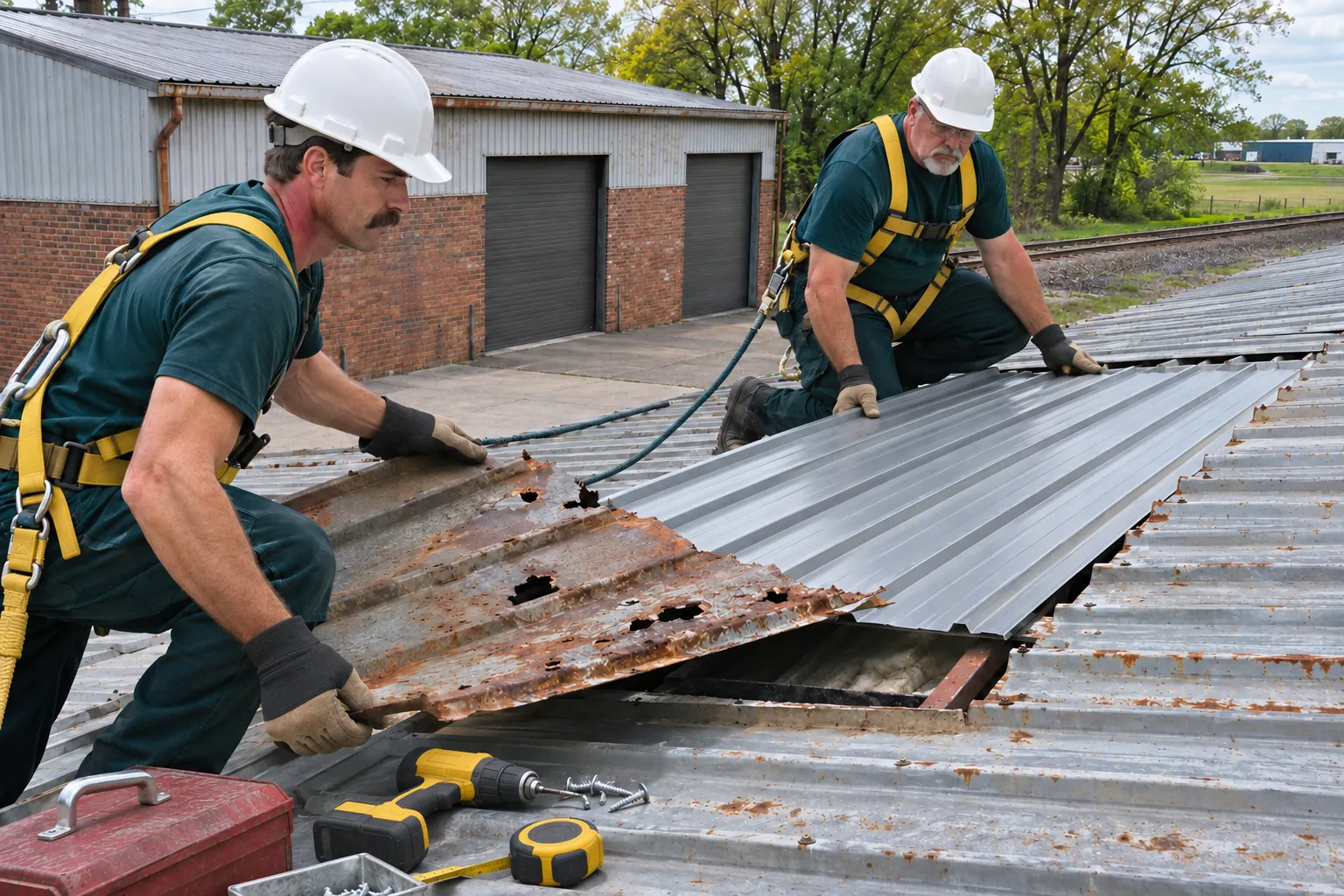
As a South Bend commercial metal roof repair contractor, we replace failed fasteners, reseal laps, and swap rusted panels on shops, plants, and storage buildings.
South Bend commercial metal roof repair works when the panels and purlins are solid and the leaks come from the details. These cards help sort it out.
Screws along that run have backed out or their washers have cracked.
End laps open as sealant dries out and panels move with the seasons.
Rust has opened holes in one area while the rest of the steel is firm.
Corrosion has spread across the field and into the purlins below.
Metal panels last a long time. The parts that keep water out wear faster, and those are where most repairs happen.
Each repair keeps the panel profile, gauge, and finish of the roof already there.
Failed screws come out and slightly larger ones with new sealing washers go into the same holes along the whole run.
Old sealant is cleaned out, butyl tape goes between the panels, and the lap is refastened tight.
Rusted-through panels are lifted out and new ones in the matching rib and gauge are lapped in.
Cracked or hail-broken light panels are replaced with matching profiles and sealed at both laps.
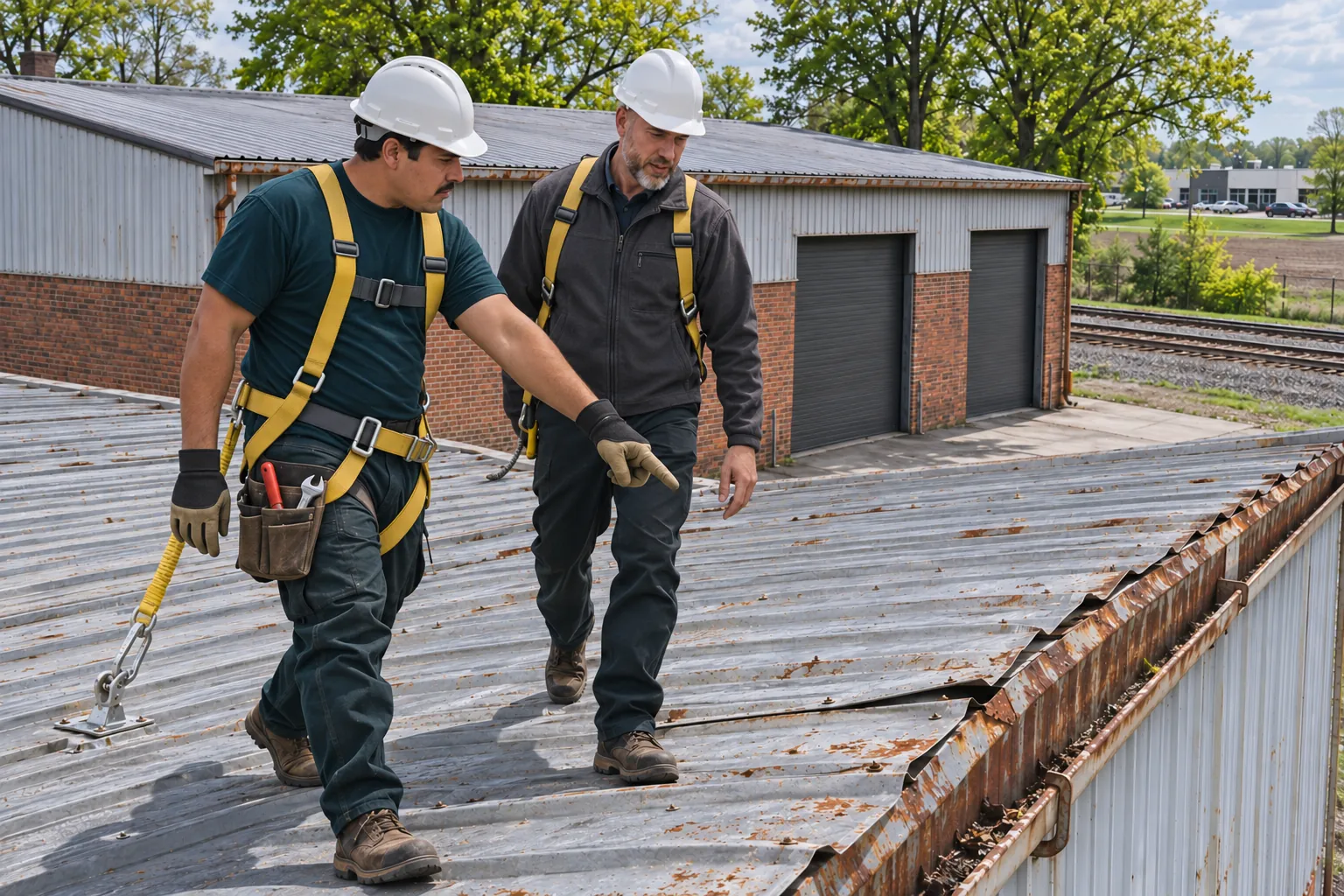
Fixing the details keeps the steel panels themselves in service for many more years.
A row of drips usually means a row of failed fasteners. A roof walk confirms it and prices the run.
Get A Free EstimateThe steps below follow a metal roof repair from the first drip to the last fastener.
Drip points inside get marked against the purlin lines, which narrows the leak down to a few panels on the roof.
Each screw in the suspect run is checked for backing out and cracked washers, along with laps and trim nearby.
Panel profile, gauge, and color are recorded so replacement panels, trim, and fasteners match the existing roof.
Old fasteners come out, oversized ones go in, laps get fresh butyl tape, and any rusted panels are swapped.
Before leaving, the run is walked again to confirm every fastener is seated, and photos are taken of the finished work.
Metal buildings often have a flat office roof or a plant floor below. These services cover those.
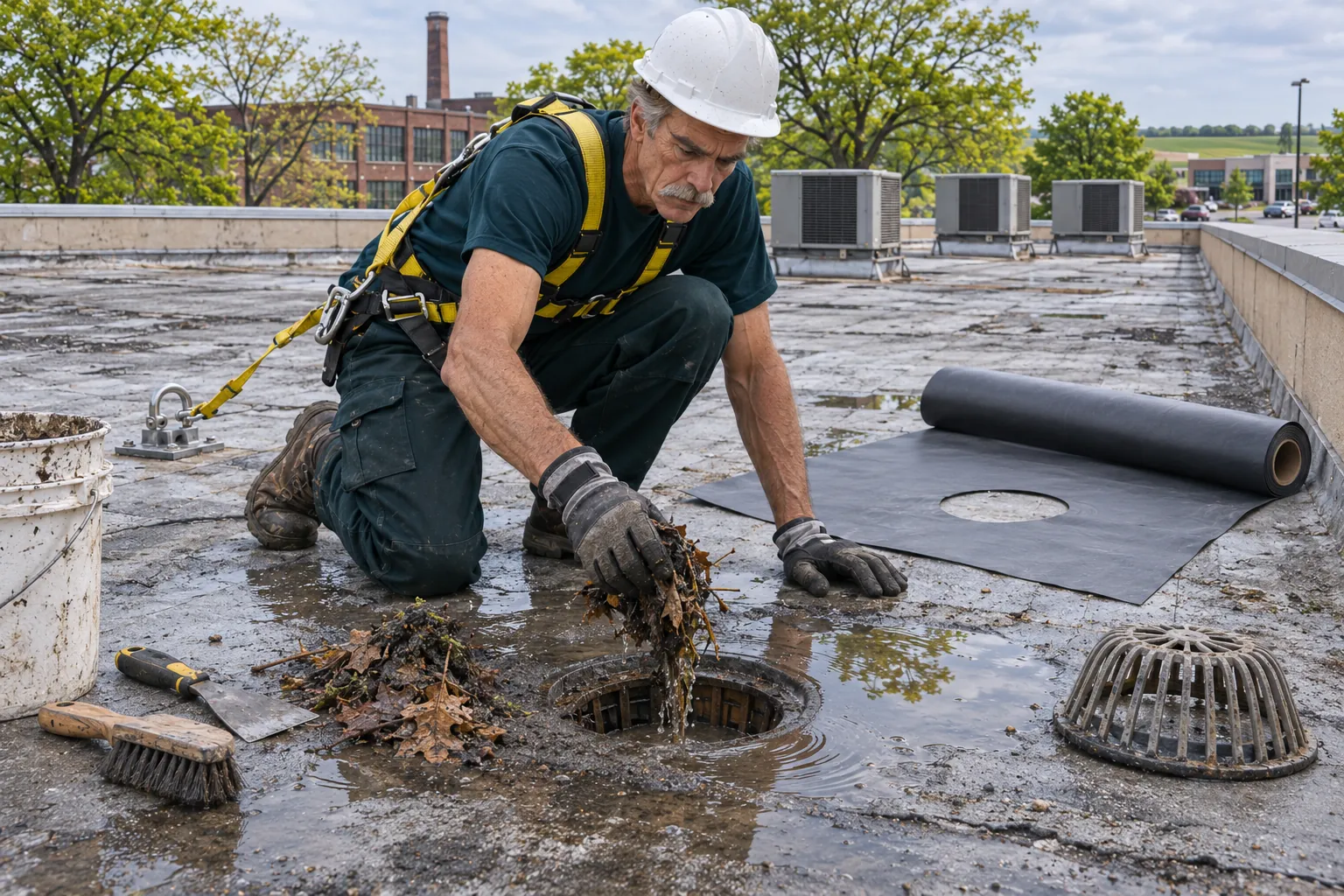
Seams, blisters, and drains on low-slope membrane roofs.
Typical Repairs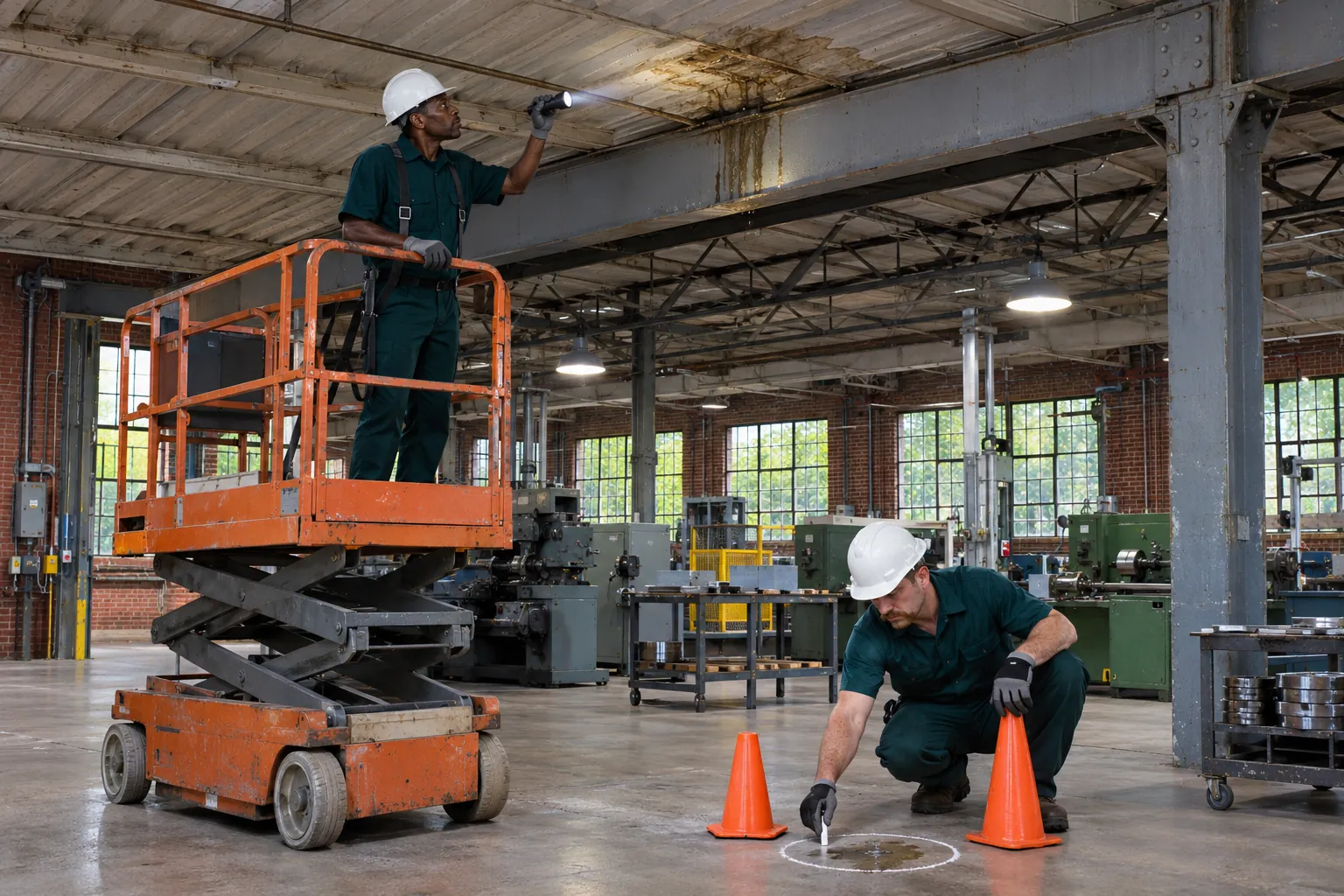
Leaks traced from the ceiling stain up to the opening.
Typical Repairs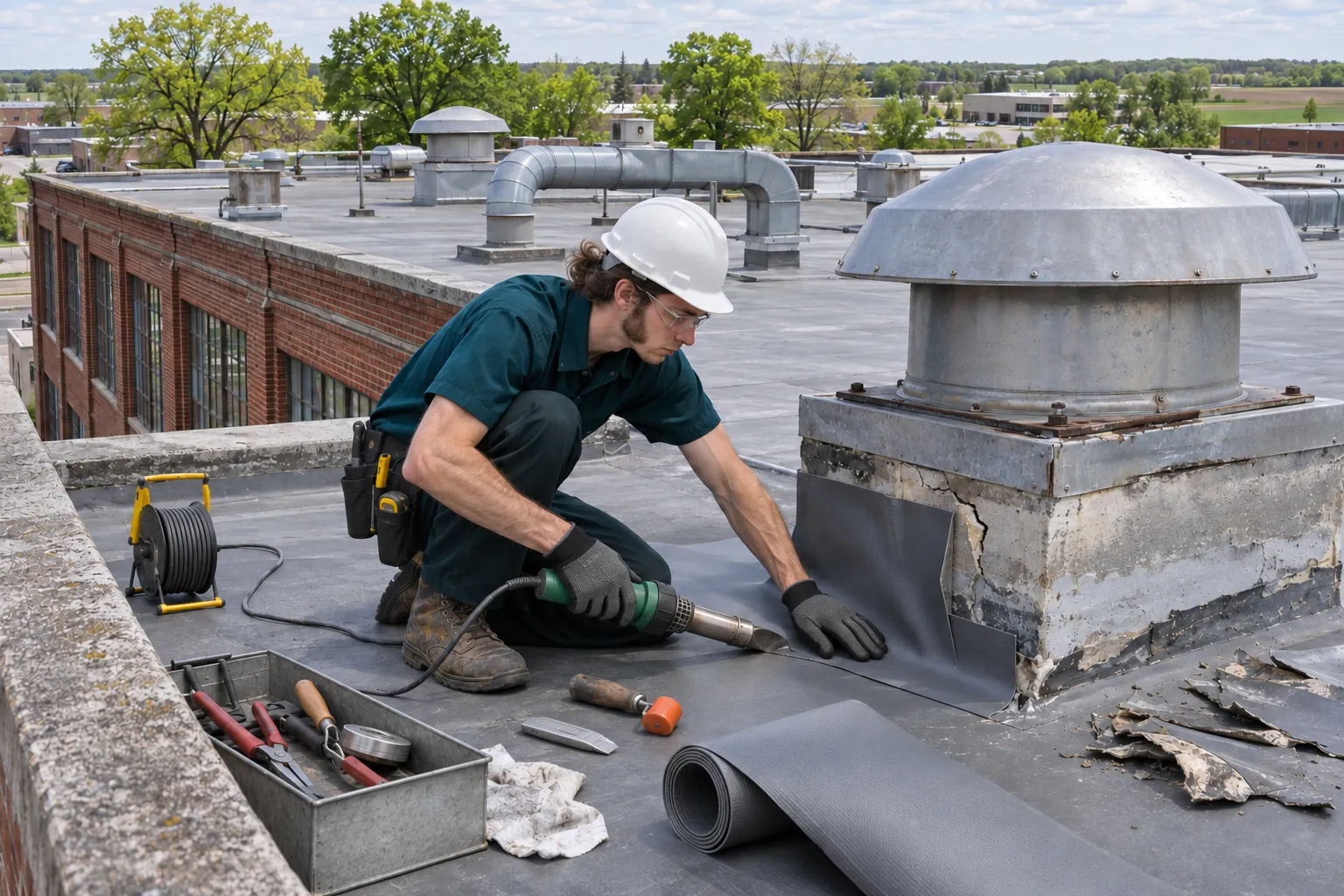
Stacks, curbs, drains, and walkways over working plant floors.
Typical RepairsAnswers about service life, flashing, hail, and the leak cause we see most.
The panels often last several decades. Fastener washers, sealants, and flashings wear out much sooner, and those parts decide when a metal roof starts to leak.
Gauge, finish, rust at cut edges, and snow and ice sitting at eaves all shorten service life. Repairing those details keeps the panels working longer.
Rusted or loose flashing at walls, curbs, ridges, and eaves is removed and replaced with matching metal and sealed fasteners, with butyl tape or sealant at the laps.
Where flashing meets masonry, counterflashing goes into the wall. The work is timed around production so the floor below stays protected.
Documentation comes first, then the repair targets what lets water in. Dents that leave the metal intact seldom leak.
Cracked sealant, loose fasteners, and broken skylight panels are the usual hail repairs, and any panel the hail punctured gets replaced.
Fasteners. Washers dry out and crack, and expansion and contraction back screws out of their holes on exposed-fastener roofs.
Laps, ridge caps, and penetration flashings come next. Oversized fasteners, resealed laps, and new flashing stop most of these leaks.
Yes. Standing-seam roofs have hidden clips instead of exposed screws, so their leaks usually start at end laps, ridge closures, and penetration flashing.
Those details are resealed or replaced, and a damaged panel can be swapped by opening the seams on each side.
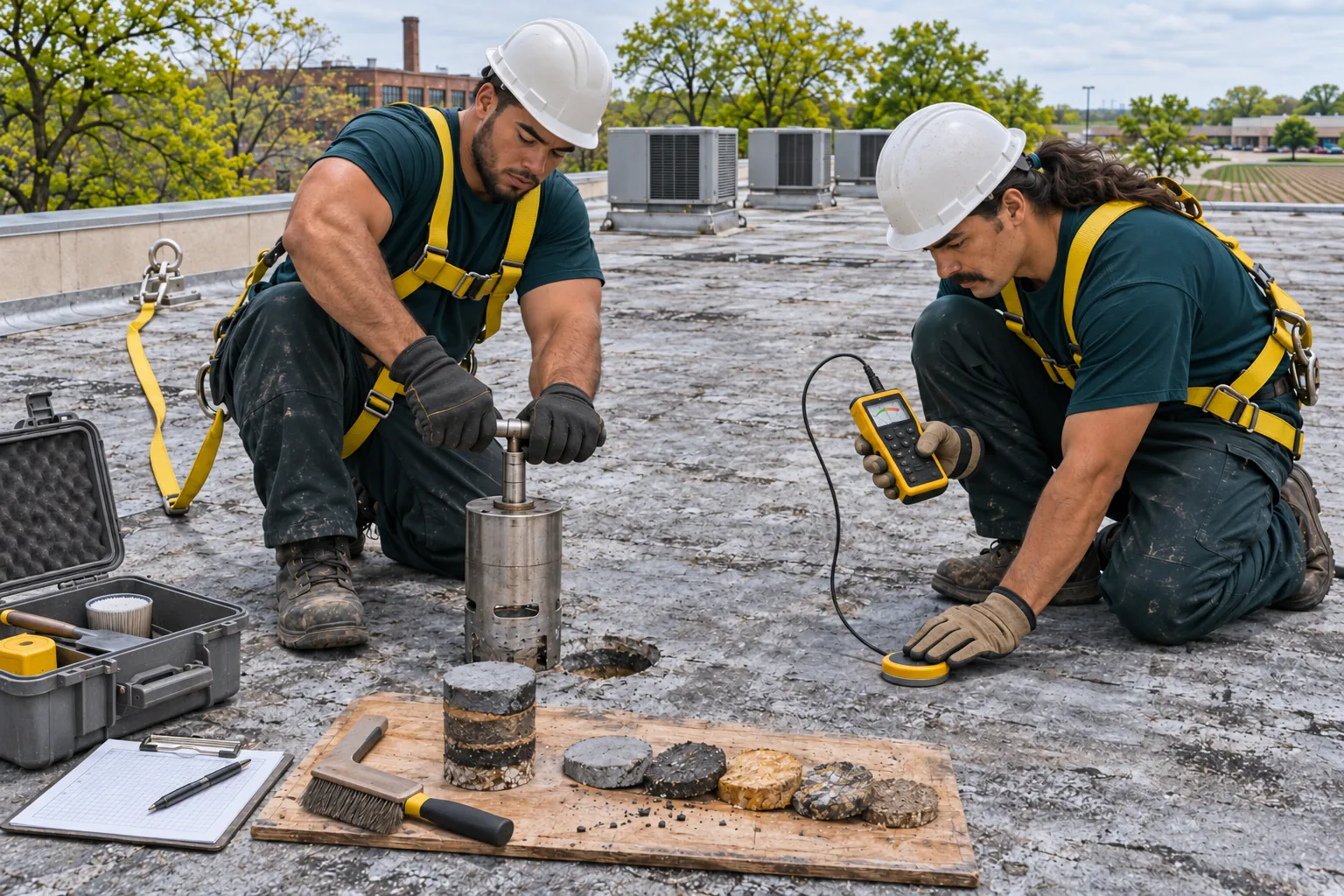
Tell us where the drips line up and what kind of panels you have. We will walk the roof and price the fasteners, laps, or panels that need work.