If Your Roof
Leaks Only After Snow Melts
Meltwater backs up behind ice at drains and eaves and rises over flashing.
Start WithSnowmelt leak tracing
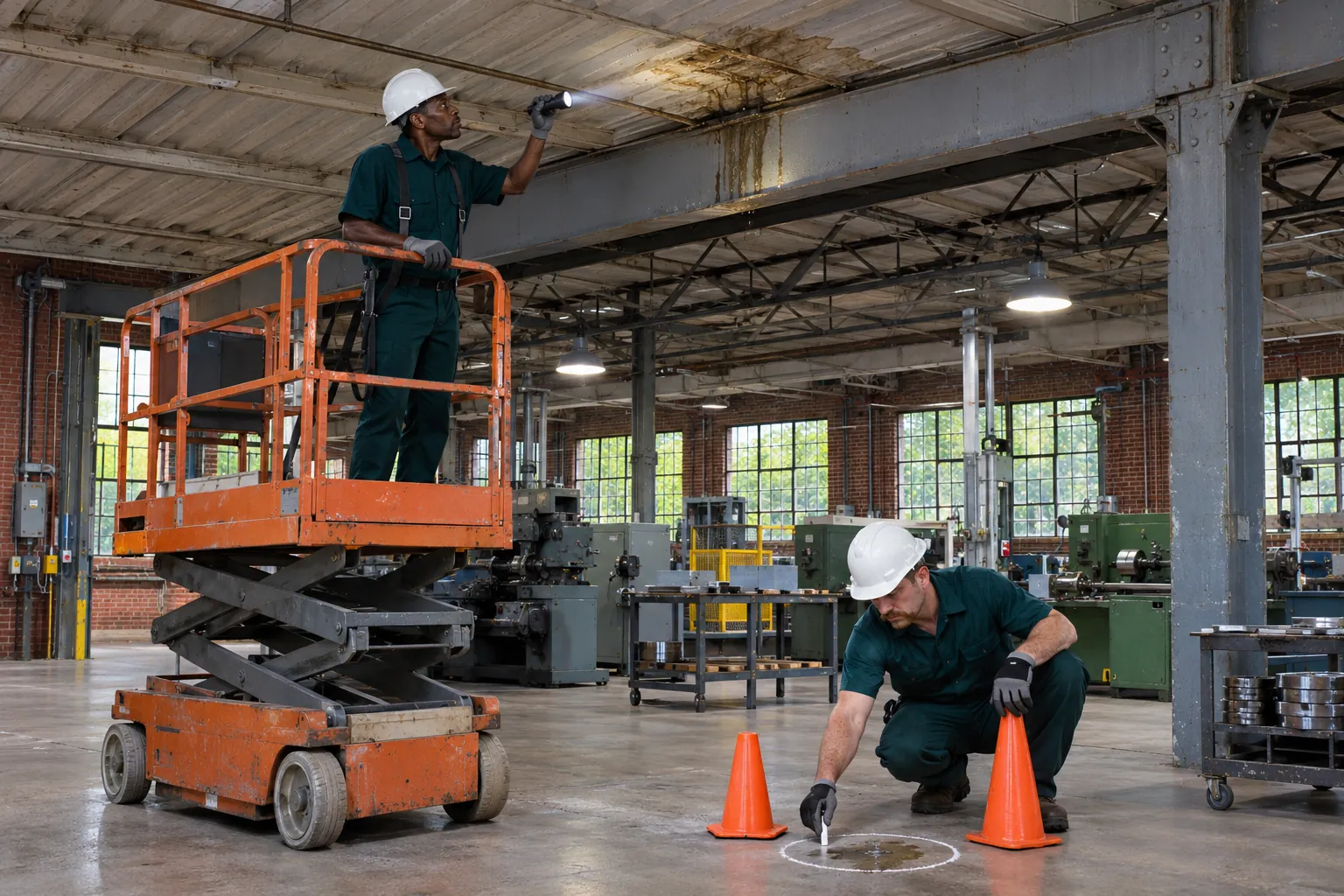
As a South Bend commercial roof leak repair contractor, we start at the stain inside, follow the water up, and seal the opening it came through.
South Bend commercial roof leak repair is for leaks whose source is hidden. These cards show when tracing comes first.
Meltwater backs up behind ice at drains and eaves and rises over flashing.
Water is entering at the coping or the masonry above the base flashing.
Moisture is running under the membrane or along a purlin before it drops.
Several unrelated stains often point to a roof past the point of patching.
Hidden leaks come from a handful of places. Each card names what you see inside and what it usually means up top.
Tracing a hidden leak takes a few specific methods, used in this order.
Stains and drip points are marked on a floor plan, then matched to roof features above them.
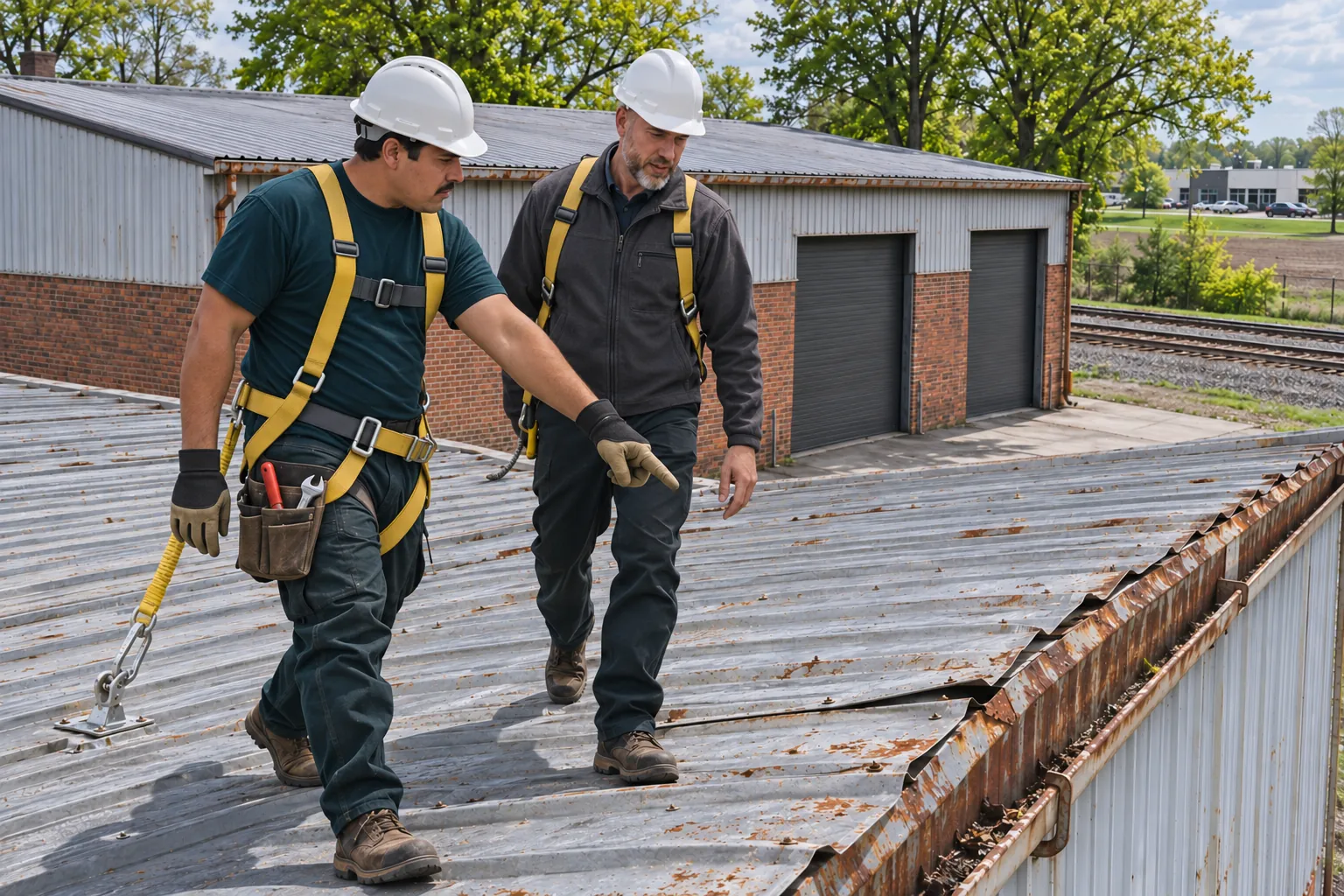
On open-deck buildings, a lift puts a roofer at the deck to follow the water trail to its entry point.
Water is run over one roof area at a time while someone watches inside, until the drip returns.
Coping is resealed or replaced, base flashing and counterflashing renewed, and wall cracks sealed.
Finding the real opening once costs less disruption than patching the wrong spot twice.
That is the most common leak we trace. Mark where it shows and when it gets worse, and we will follow it to the source.
Get A Free EstimateA traced leak follows these five steps from the stain to the sealed opening.
Buckets, plastic, and moved furniture keep water off floors and equipment while the leak is traced.
Each stain and drip point is marked, along with the weather that makes it worse, to narrow the search area on the roof.
From a lift or the roof, the trail is followed along purlins, under laps, or down the wall to where it enters.
Coping joints, base flashing, laps, or curb corners get repaired with materials matching the roof around them.
After the next heavy rain or thaw, the stain area is checked to confirm the repair held.
Once the source is found, the fix often belongs to one of these services.
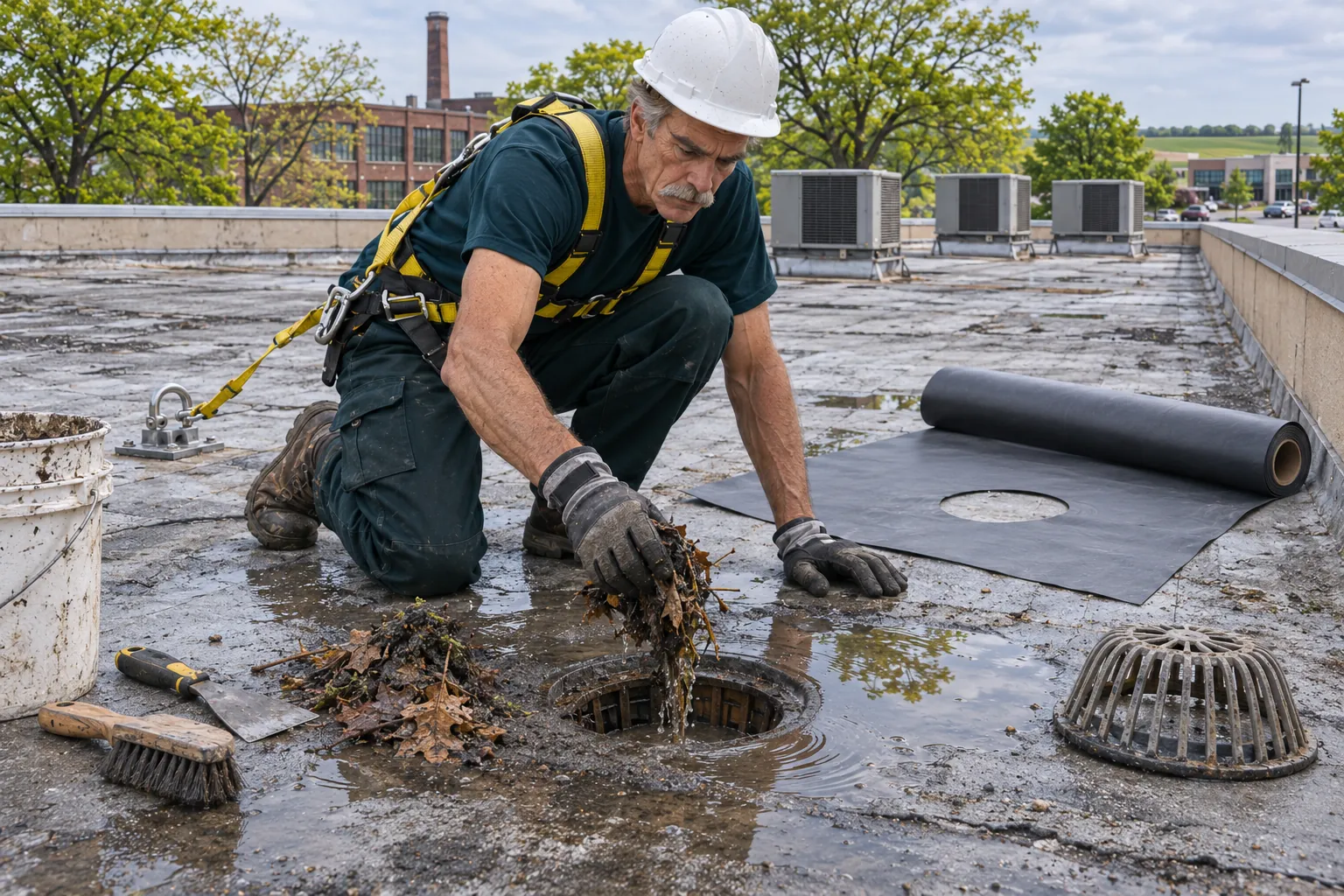
Seams, blisters, and drains on low-slope membrane roofs.
Typical Repairs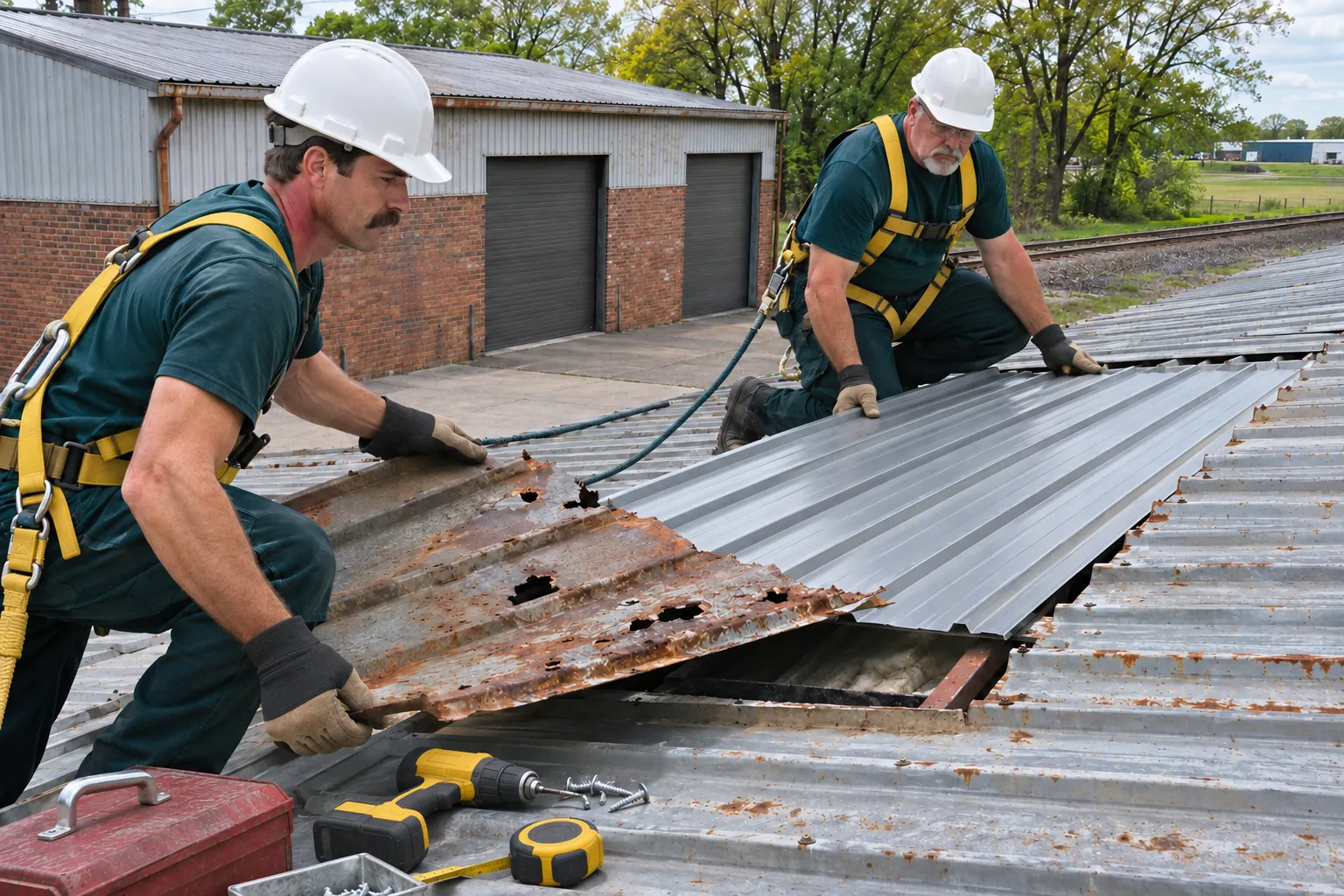
Fasteners, laps, trim, and rusted panels on metal buildings.
Typical Repairs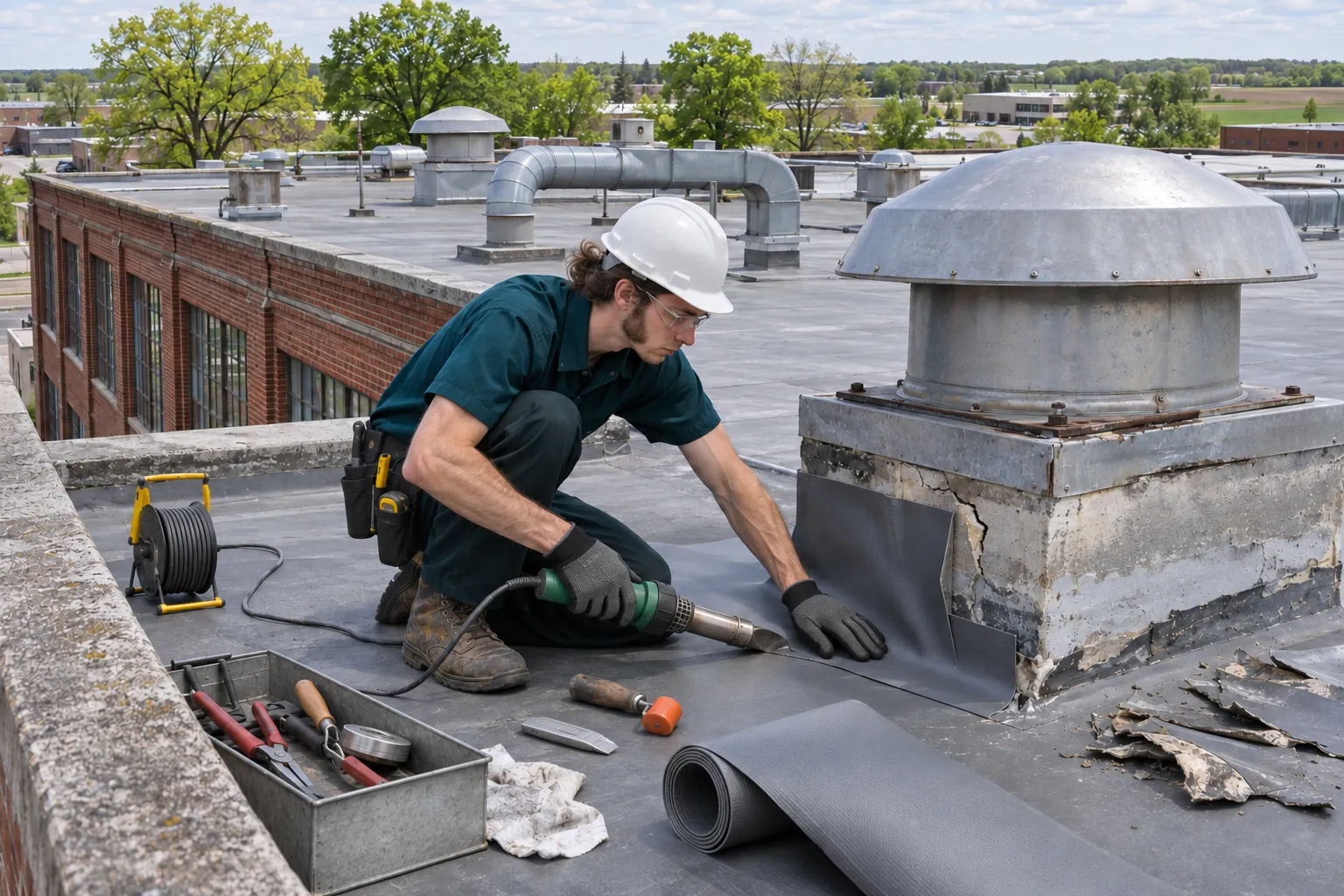
Stacks, curbs, drains, and walkways over working plant floors.
Typical RepairsAnswers about snowmelt, parapets, ice dams, rain leaks, and medical buildings.
Meltwater pools behind ice at drains, gutters, and scuppers, then rises above flashing or seeps through laps that rain never reaches. Freeze-thaw cycles widen small seam gaps through the winter.
The National Weather Service has recorded heavy lake-effect snow from Lake Michigan in St. Joseph County, so repeated melts are common. Clearing drains and sealing the openings stops these leaks.
The coping cap and its joints, the wall face, and the base flashing at the roof line all get checked, since parapet leaks often come through open coping seams or cracked masonry.
Repairs include resealing or replacing the coping, new base flashing and counterflashing, and sealing cracks in the wall.
Escaping heat melts snow, and the water refreezes at colder eaves, gutters, or drains. Water then backs up behind the ice and runs under laps and flashing.
Sealing those entry points is the repair. Better insulation, ventilation, or heat trace at problem drains reduces how often the dams return.
No. A commercial roof in good shape keeps out heavy rain. A leak means something failed or is blocked: a drain, a seam, a flashing, or a coping joint.
Heavy rain only reveals the opening. Tracing the water finds which one, and the repair targets that cause.
Occupied rooms get protected first with temporary measures, then the leak is traced on the roof. Work is scheduled around patient hours.
Quiet methods and odor control near rooftop air intakes keep the building running. Curbs, drains, and parapet coping are the usual sources.
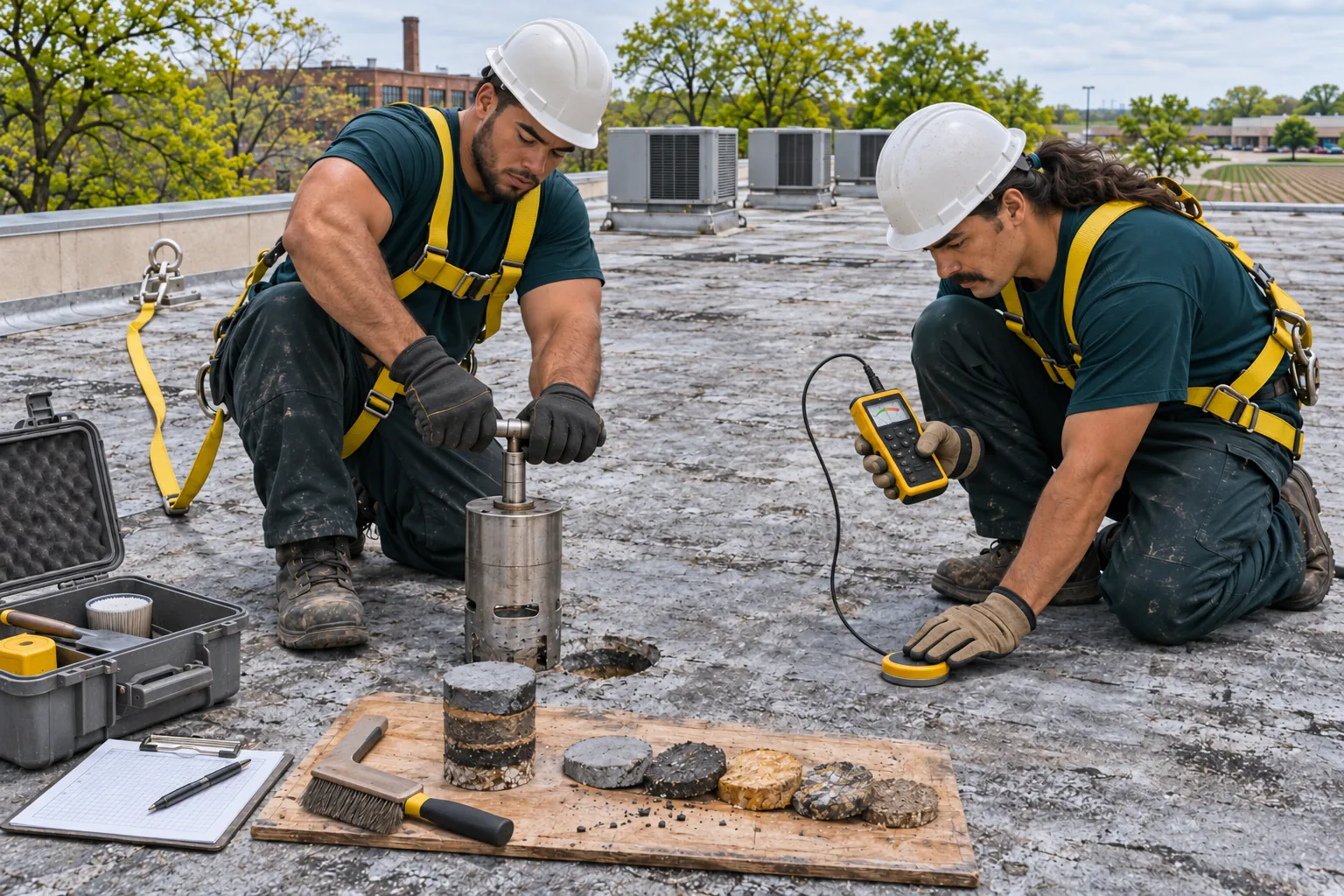
Tell us where the water shows and when. We will trace it to the opening and price the repair once the source is confirmed.