If Your Roof
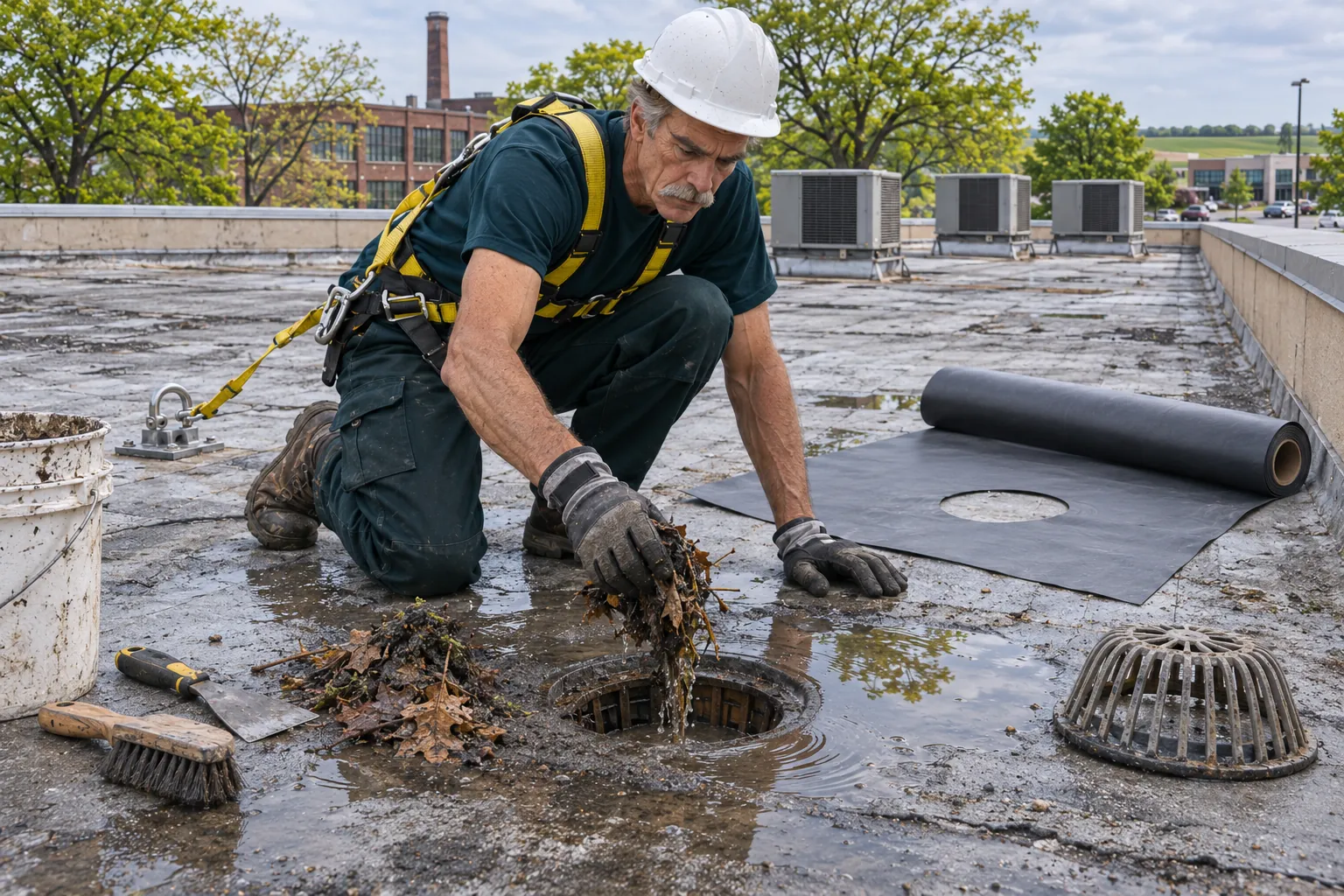
Ponds Water Near One or Two Drains
Debris or a sunken drain bowl holds water on the roof after every storm.
Start WithA drain reset and seam check
As a South Bend flat roof repair contractor, we fix the drain, seam, or blister letting water in and match the patch to your membrane.
South Bend flat roof repair fits most leaks on low-slope roofs. These cards show where it fits and where a bigger plan makes more sense.
Debris or a sunken drain bowl holds water on the roof after every storm.
Small intact blisters get watched, and cracked ones get cut, dried, and patched.
An open lap on TPO or EPDM closes with a welded patch or primed tape.
Cores read wet across large areas and the membrane feels soft underfoot.
Low-slope roofs hold water longer than pitched ones, so small openings grow fast. These are the conditions that bring most flat roof calls.
The method follows the membrane already on the roof. Here is how each detail gets repaired.
A hot-air welder fuses a new TPO patch to cleaned membrane, and each seam is probed after it cools.
Old EPDM is cleaned and primed so new seam tape bonds to rubber that has weathered for years.
Cracked or blistered areas get new plies of compatible material set in matching adhesive.
Bowls, clamping rings, and strainers are replaced as needed, and fresh membrane is flashed into the drain.
Temporary patches stop active leaks in the cold, and permanent membrane work waits for a dry day warm enough for adhesives and primers.
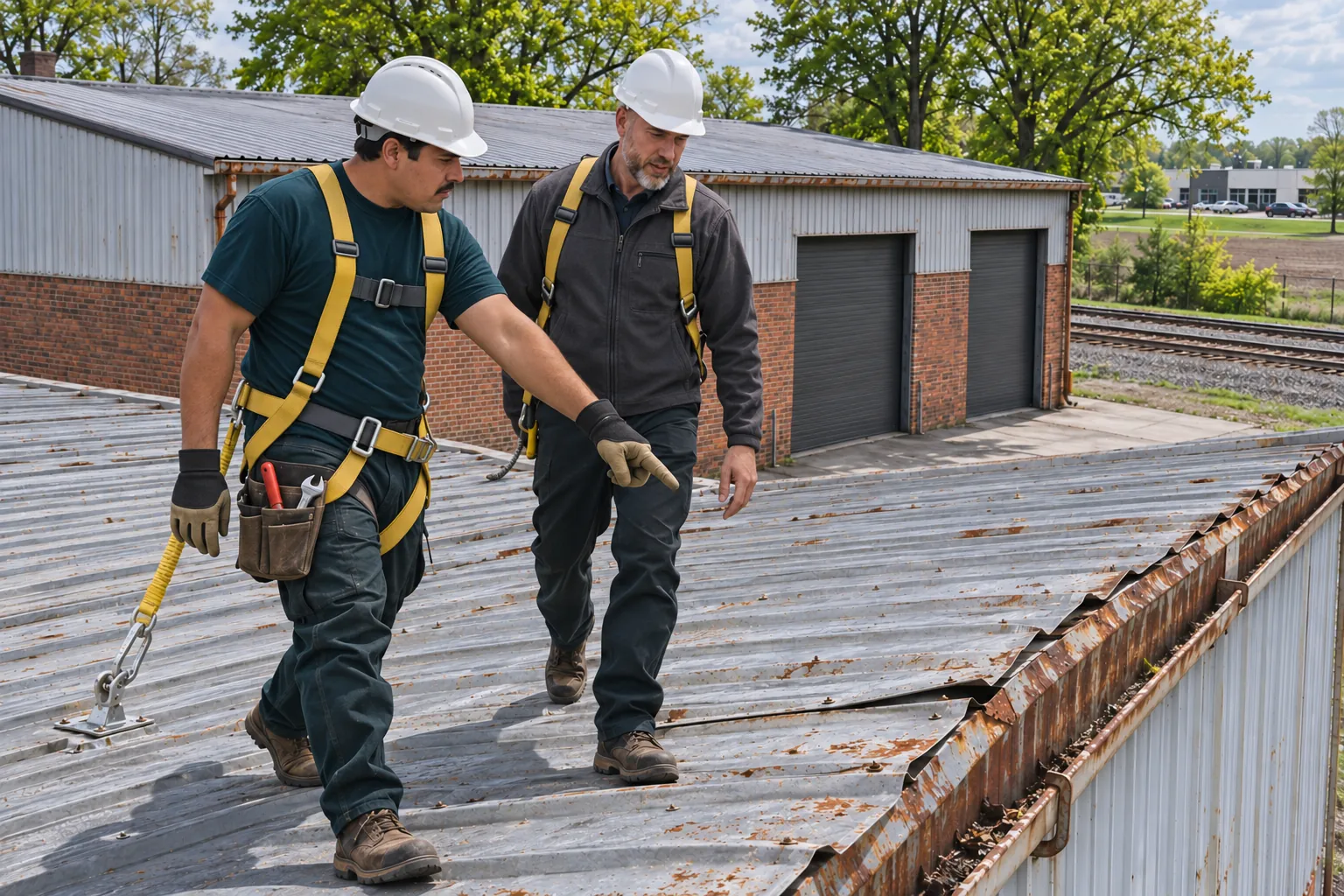
On a long low-slope roof, one good repair protects a lot of floor below.
Ponding near a drain is the most common start to a flat roof leak. A roof walk shows whether the drain, the deck, or the insulation is the cause.
Get A Free EstimateFive steps take a flat roof from a stain inside to a sealed, recorded repair.
Debris comes off strainers first. Water left standing after the drains run shows where the roof holds water and where the deck has sagged.
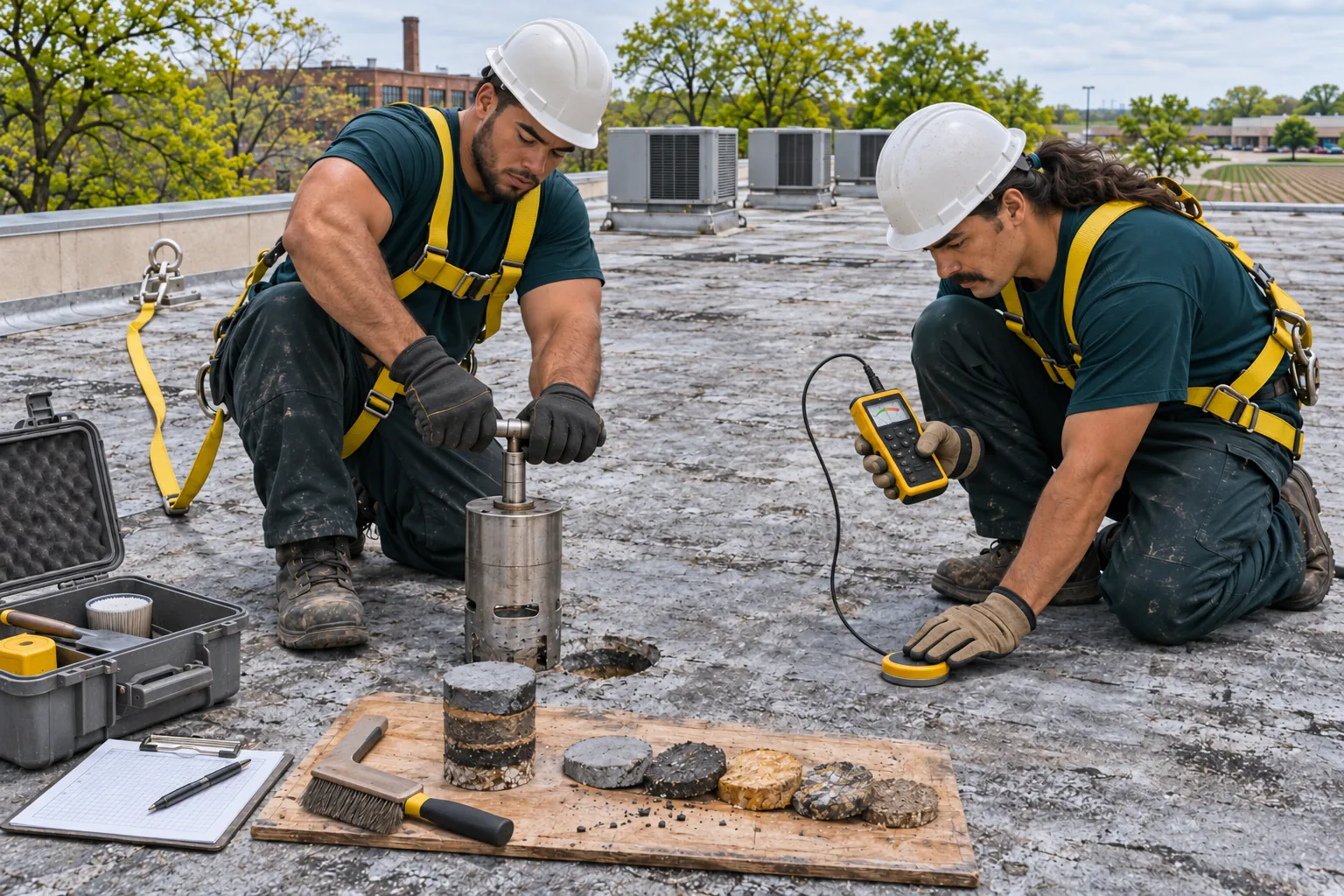
A probe runs along suspect laps while a meter scans the field. Cores confirm wet spots so the repair covers every soaked board.
Soaked insulation under the leak is cut out down to dry board and replaced, so the new membrane sits on a dry base.
TPO gets welded, EPDM gets primed tape, and built-up or mod bit gets compatible plies, all lapped onto clean existing membrane.
Drains are run with water where possible, finished seams are probed again, and photos record each repaired area.
Flat roofs often sit beside metal additions or over working plants. These services cover the rest.
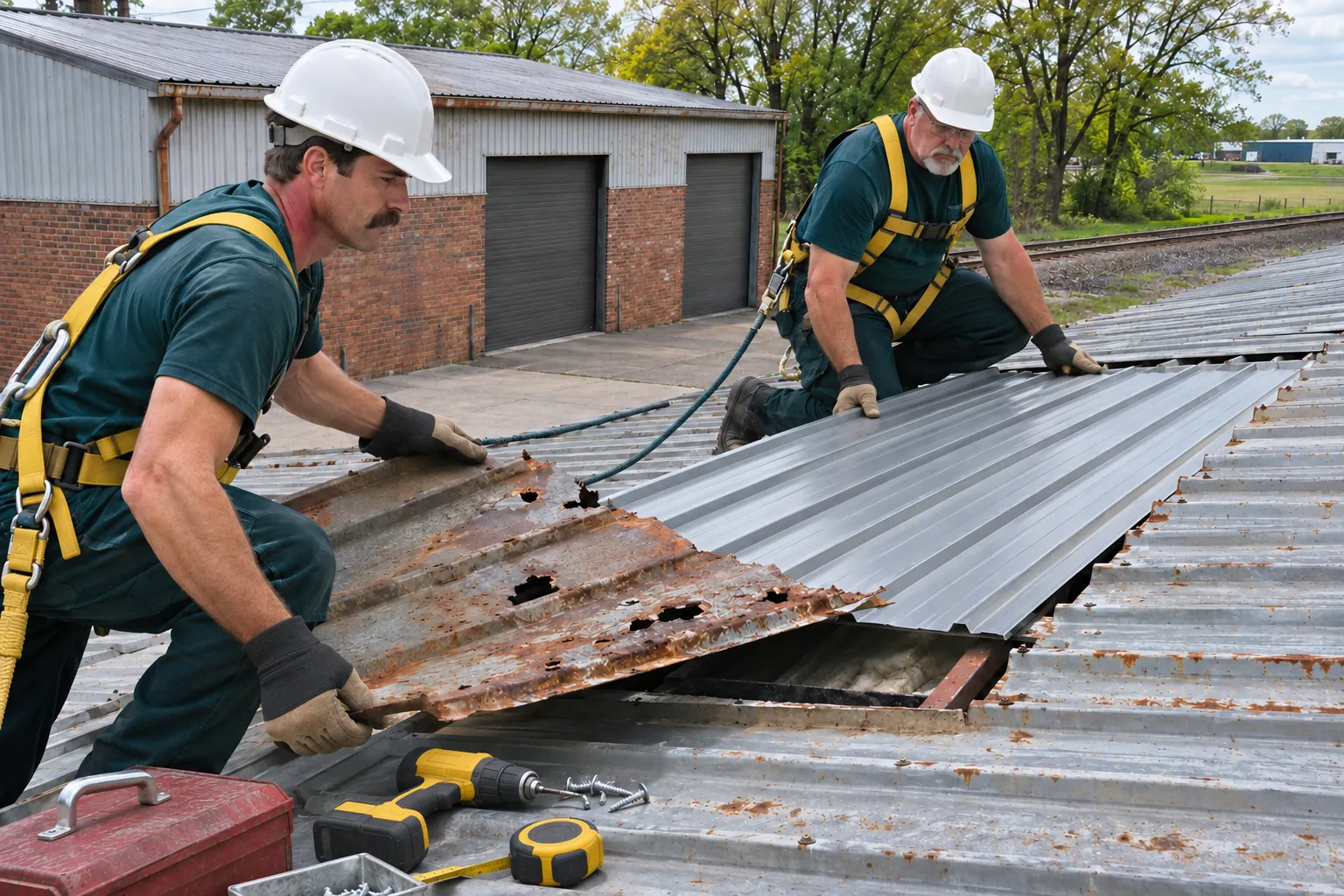
Fasteners, laps, trim, and rusted panels on metal buildings.
Typical Repairs
Leaks traced from the ceiling stain up to the opening.
Typical Repairs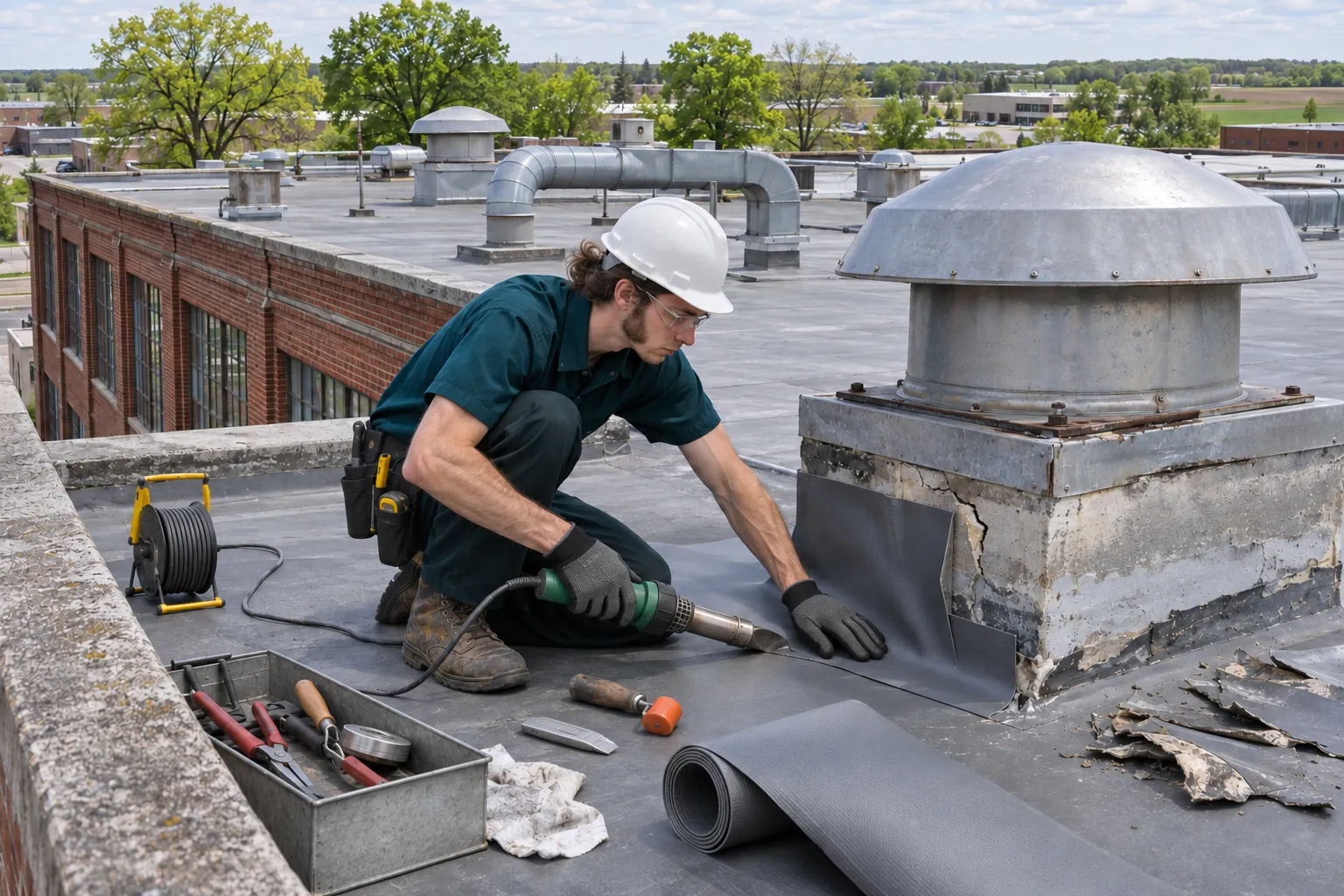
Stacks, curbs, drains, and walkways over working plant floors.
Typical RepairsAnswers about drains, blisters, winter work, and the code that applies.
Finding the true source comes first, because water travels under the membrane before it drips. Then the repair uses matching material: welded TPO, primed EPDM tape, or compatible plies.
Soaked insulation under the patch gets cut out. On long warehouse runs, fixing the drainage often stops several leaks at once.
No. Small blisters that are intact get watched. Cracked or large ones get cut, dried, and patched with compatible material.
Blisters spread across the whole roof usually mean wet insulation or weak adhesion underneath, and a moisture survey tells which.
Many repairs can. Temporary patches stop active leaks in the cold, and permanent repairs go ahead on dry days.
Adhesives and primers have minimum temperatures, so some membrane work waits for a milder day or uses cold-weather products. Snow and ice come off the work area first.
Heavy rain reaches weak points that light rain misses. Water rises above flashing heights at clogged drains, ponds over open seams, and blows through coping joints.
Drainage gets cleared first, then the specific openings are traced and sealed. Ponding that keeps coming back points to tapered insulation or an added drain.
Long runs with few drains collect water, especially where the deck has deflected or foot traffic has crushed the insulation. Ice and debris at drains add to it.
Resetting drains, adding crickets or tapered insulation, and sealing seams in the ponding areas keep water from sitting there.
Indiana adopts its commercial building code through the Fire Prevention and Building Safety Commission, under 675 IAC 13. The commission lists the 2014 Indiana Building Code as the edition in effect.
That edition is based on the 2012 International Building Code. The local building department enforces it and decides how it applies to a given repair.
Send the address and where water is showing. We will walk the flat roof, check the drains and insulation, and price the repair in writing.