If Your Roof
Leaks at Stacks or Exhaust Fans
Heat and residue break down flashing at penetrations first.
Start WithPenetration flashing repair
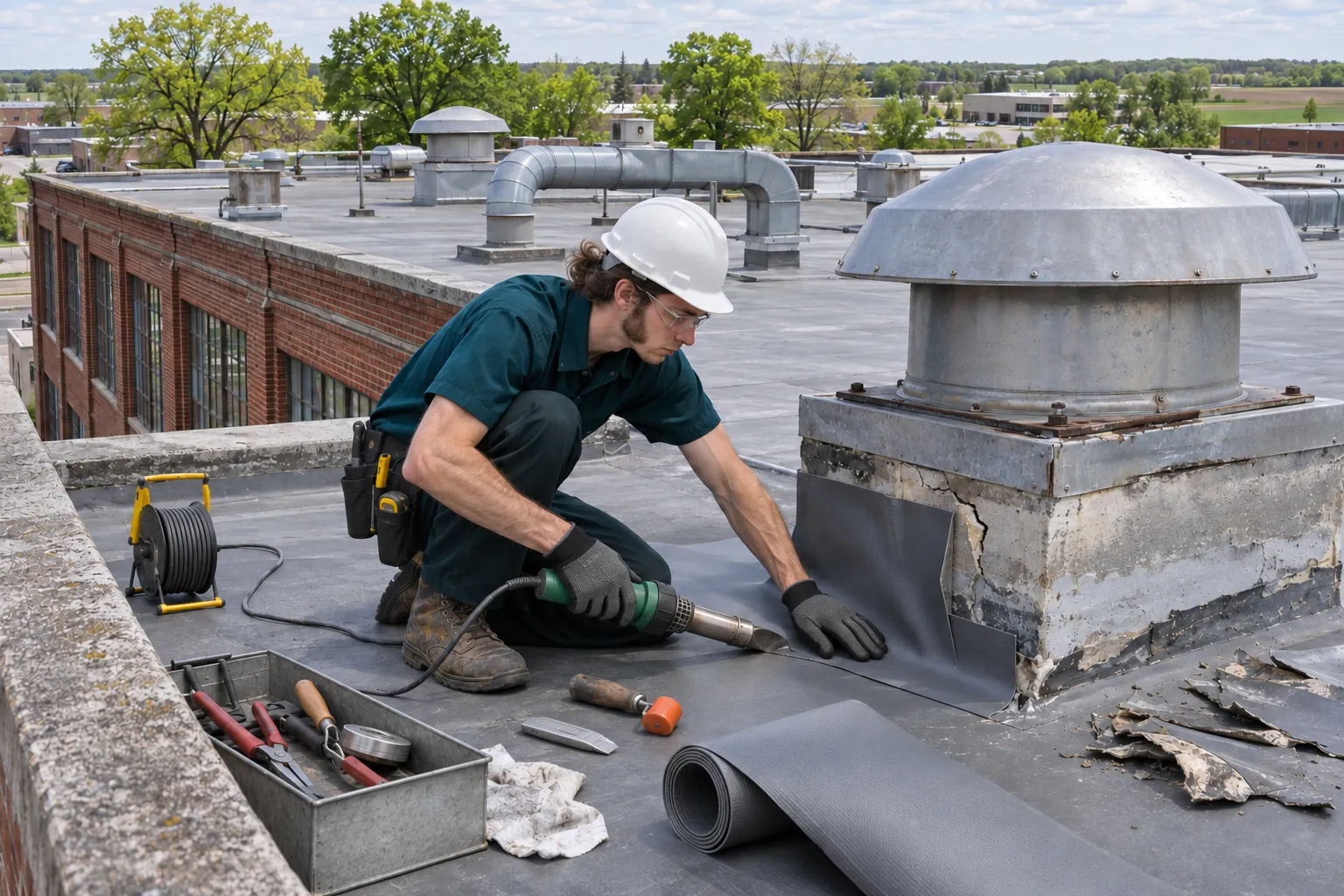
As a South Bend industrial roof repair contractor, we repair flashing, drains, and membrane on plant roofs while production keeps running below.
South Bend industrial roof repair covers roofs with heavy equipment and a busy floor below. These cards show where a repair fits.
Heat and residue break down flashing at penetrations first.
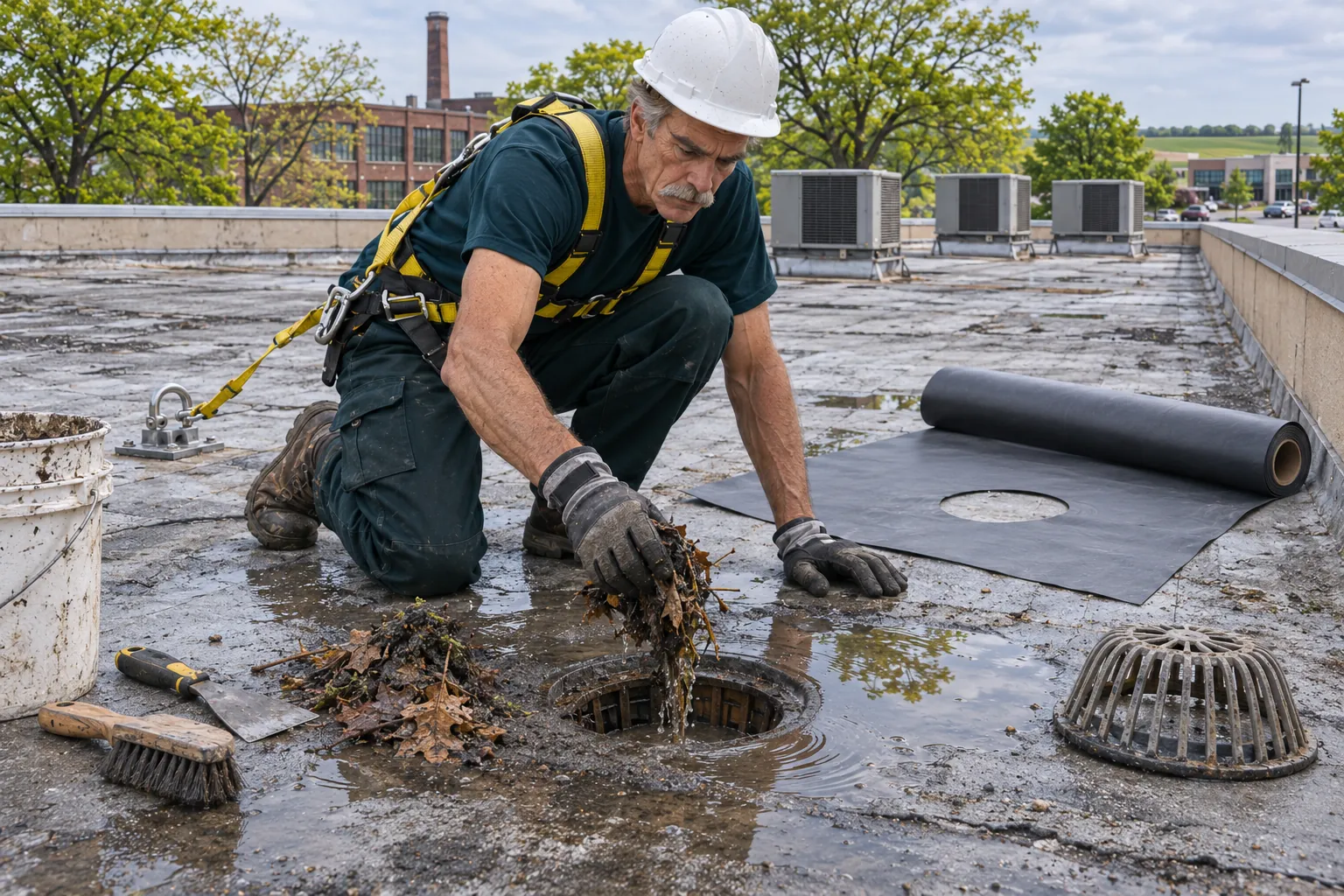
Cracked bowls or broken clamping rings let water bypass the drain.
Service traffic wears through membrane between the hatch and the units.
Cores read wet across large areas around many penetrations.
Plant roofs fail in a few predictable places. The cause decides the repair.
Each method is chosen with the plant’s safety rules and production schedule in mind.
Debris stays on the roof, floors under deck work are protected, and noisy or odor-producing tasks are scheduled between shifts.
Stacks, vents, and conduit get flashing matched to the heat and the membrane around them.
Cracked bowls and clamping rings are replaced, new membrane is flashed in, and low spots are corrected.
Near combustibles, cold-applied or heat-welded methods replace torch work entirely.
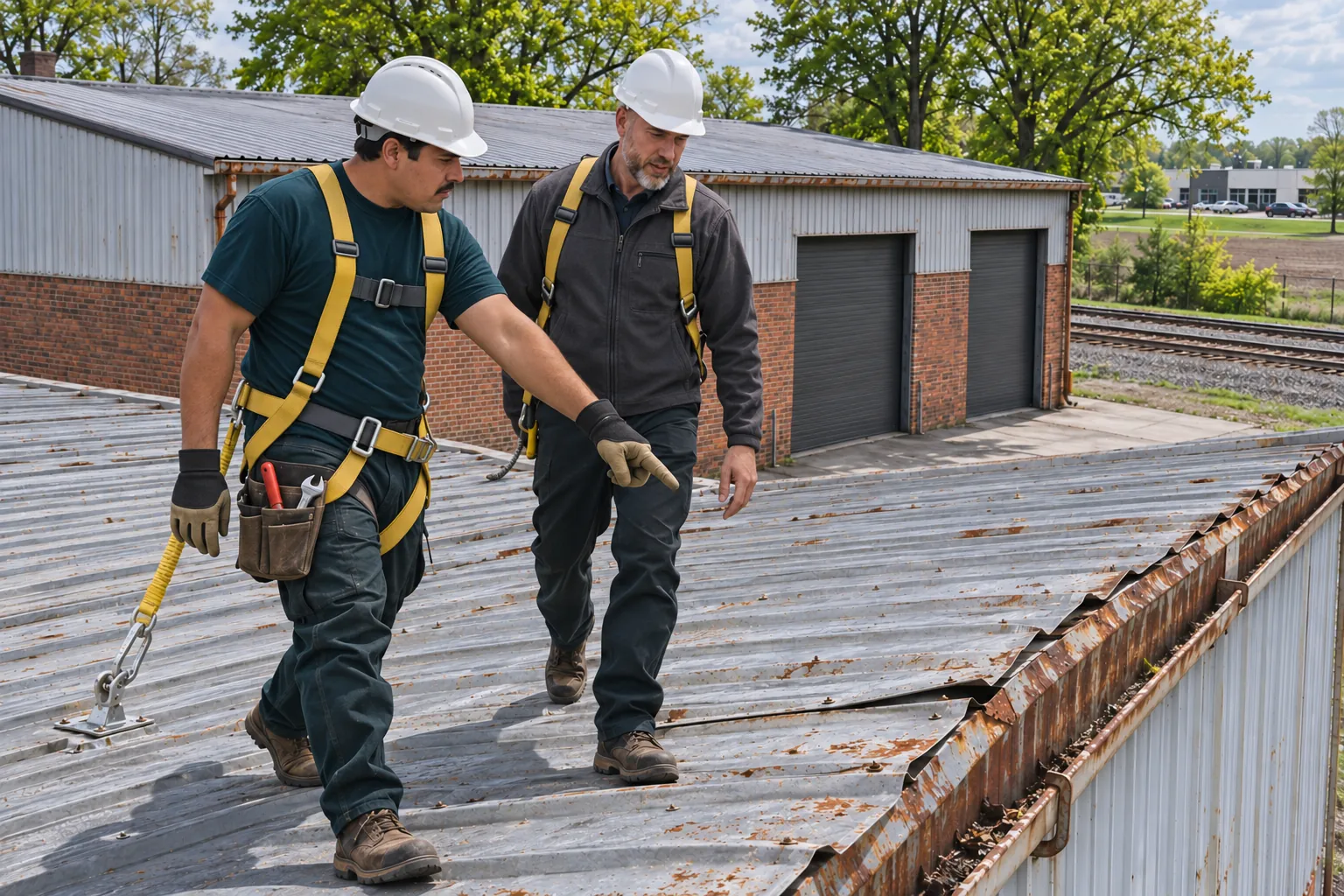
A dry roof over a plant protects people, equipment, and product all at once.
A temporary patch can protect the line while the permanent repair is planned with your safety staff.
Call UsPlant work adds a planning step before anyone goes on the roof.
Access points, hot-work rules, and fall protection are set with plant staff before the roof walk.
Stacks, vents, and equipment curbs get checked before the field, since that is where plant roofs leak first.
Loud or odor-producing work lands between shifts or during planned downtime agreed with the plant.
Wet insulation comes out, matching material goes in, and walkway pads go down along service routes.
The plant receives photos and notes for each repair, ready for its maintenance files.
Plants often pair a metal roof with a flat office section. These services cover the rest of the building.
Seams, blisters, and drains on low-slope membrane roofs.
Typical Repairs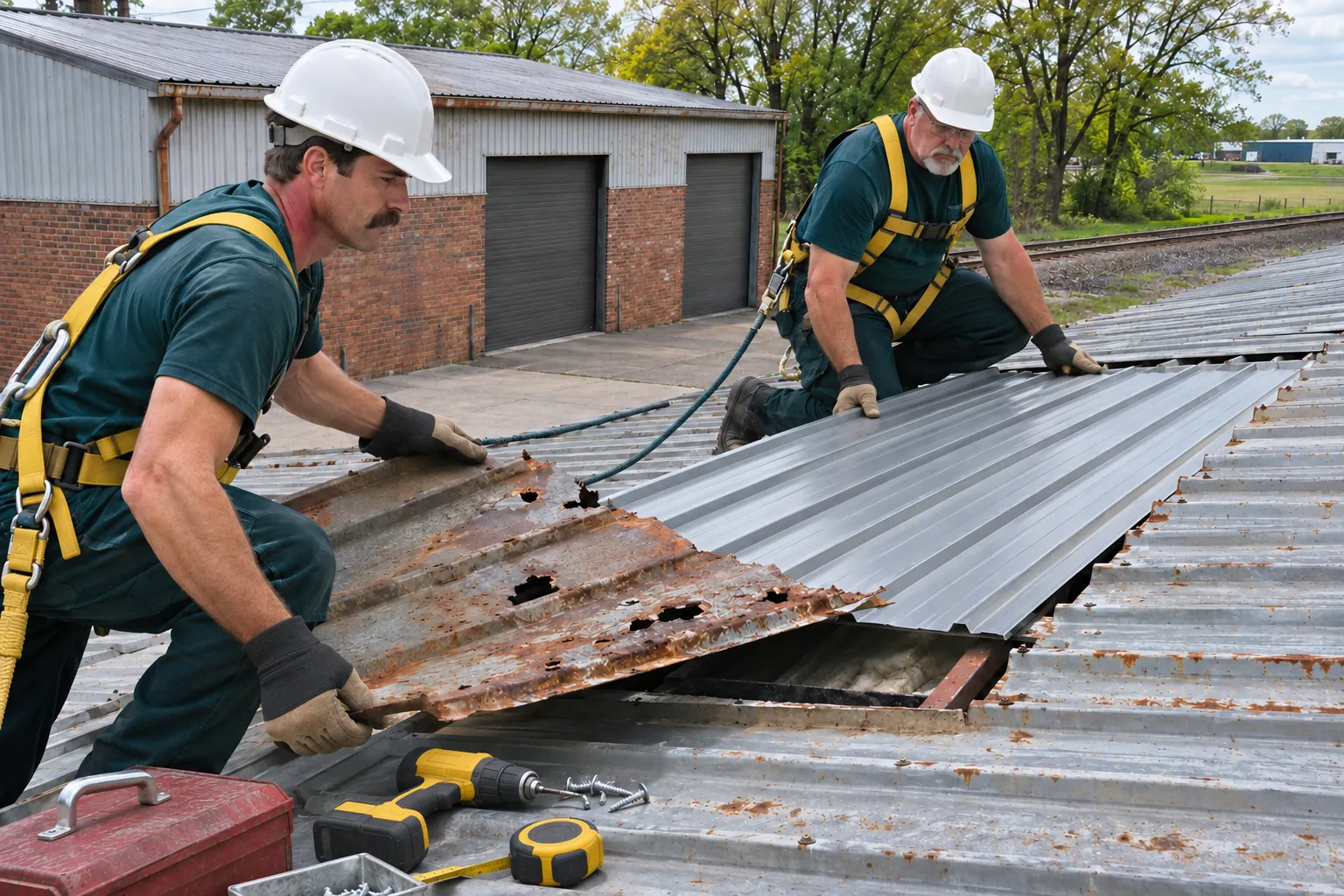
Fasteners, laps, trim, and rusted panels on metal buildings.
Typical Repairs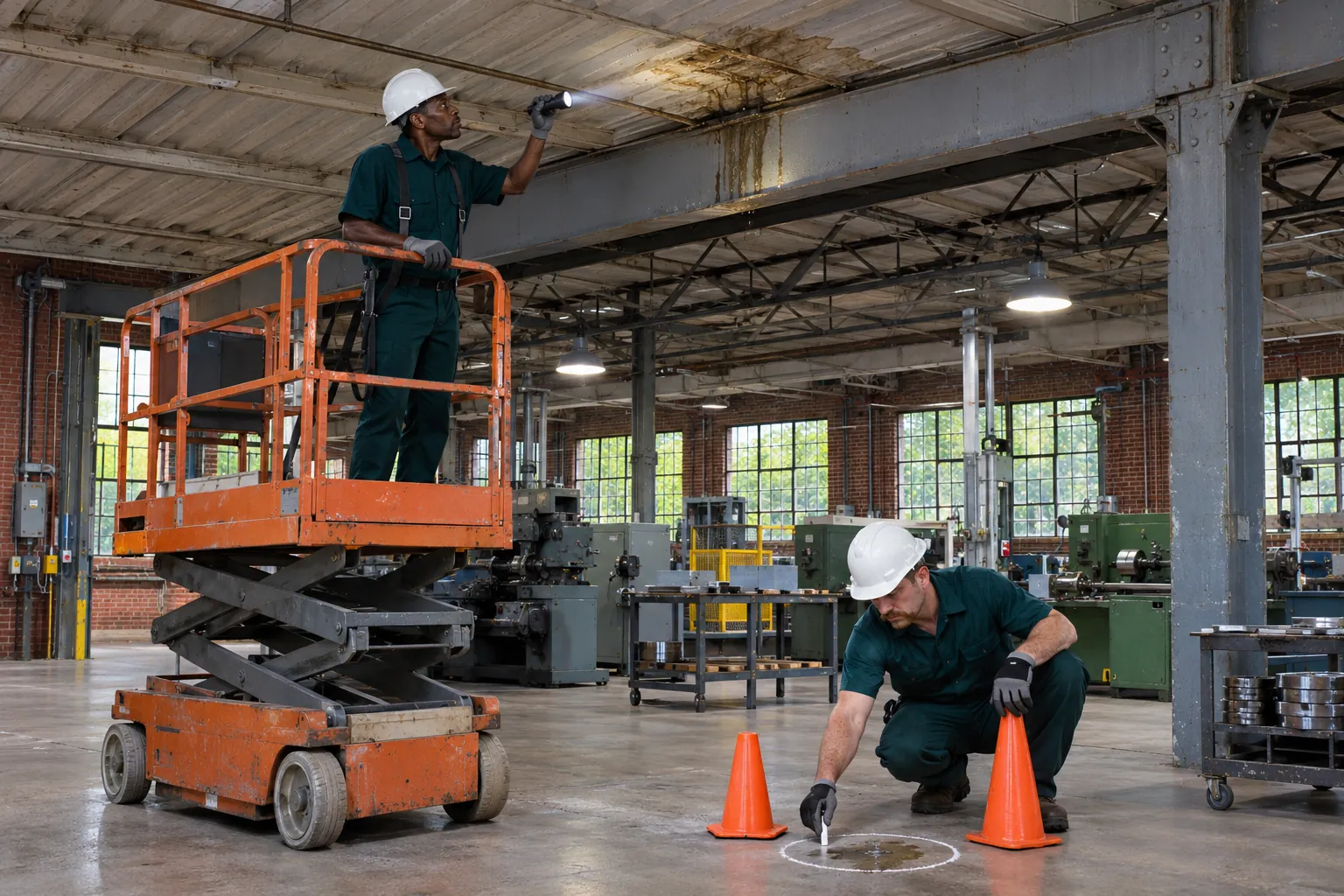
Leaks traced from the ceiling stain up to the opening.
Typical RepairsAnswers about coverage, working over production, drains, leaks, and residue.
We repair industrial roofs in South Bend, Mishawaka, La Porte, Plymouth, Winfield, and Nappanee. Plants near those towns are usually within reach too.
Call with the address and roof type to confirm the building falls in our area.
Planning keeps the line running. Debris stays up top, floors below deck work get protected, and noisy tasks wait for shift changes.
Cold-applied or heat-welded methods replace torches near combustibles, and safety rules are agreed with the plant first.
The drain bowl, clamping ring, strainer, and membrane flashing all get inspected after debris is cleared.
Cracked bowls and broken rings are replaced, new membrane is flashed in, and low spots that collect water and ice are corrected.
Penetrations get checked first, since stacks, process vents, and equipment curbs cause most plant roof leaks.
Residue damage, worn paths, and failed curb flashing are repaired with matching material, and wet insulation is cut out.
Yes. Oils and residue from some exhaust fans soften or swell certain membranes over time, especially in a ring around the fan curb.
The damaged membrane is cut out and replaced with material that resists that exposure, and the curb is reflashed.
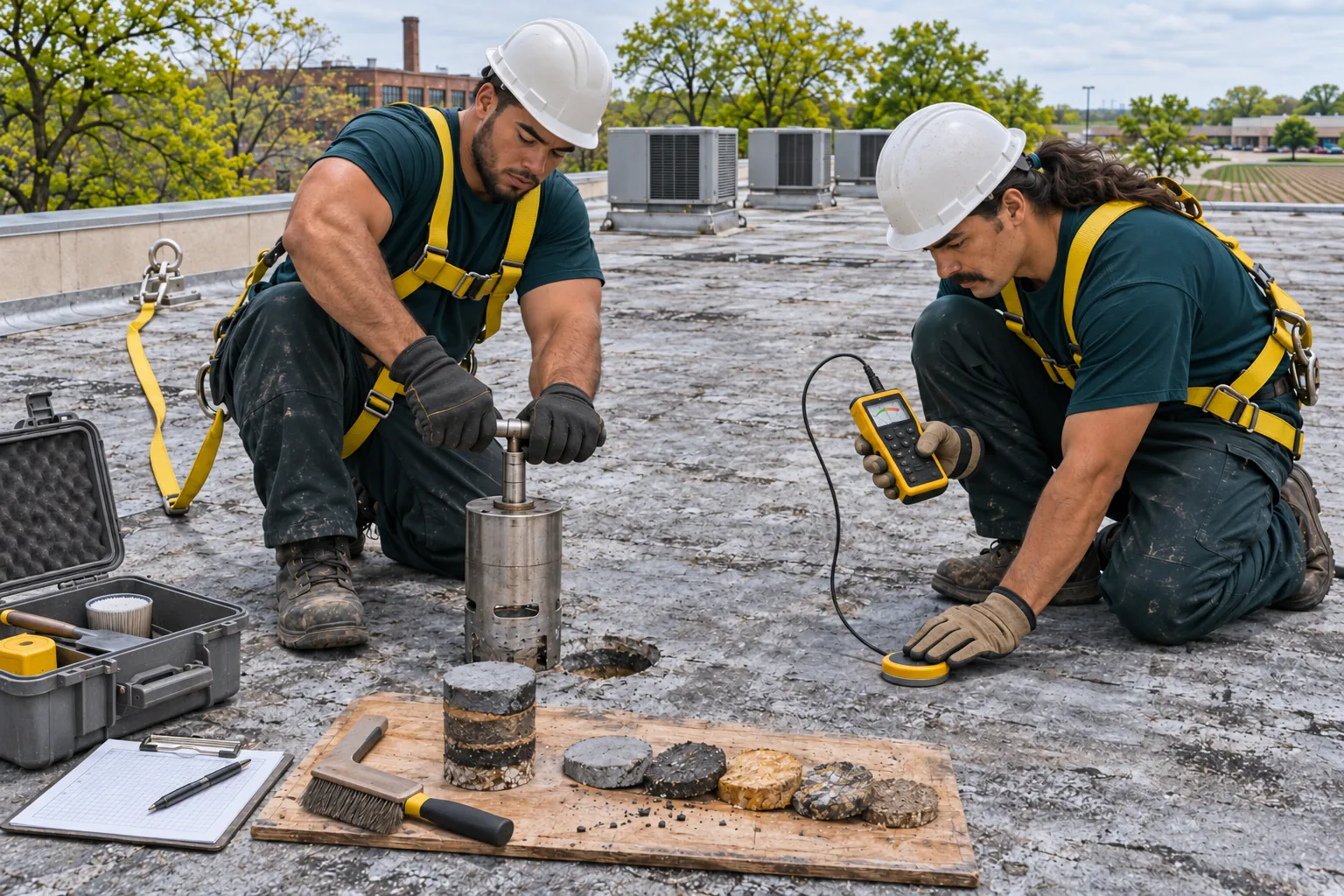
Tell us about the plant, the roof, and the shift schedule. We will plan the roof walk with your safety staff and price the repair.